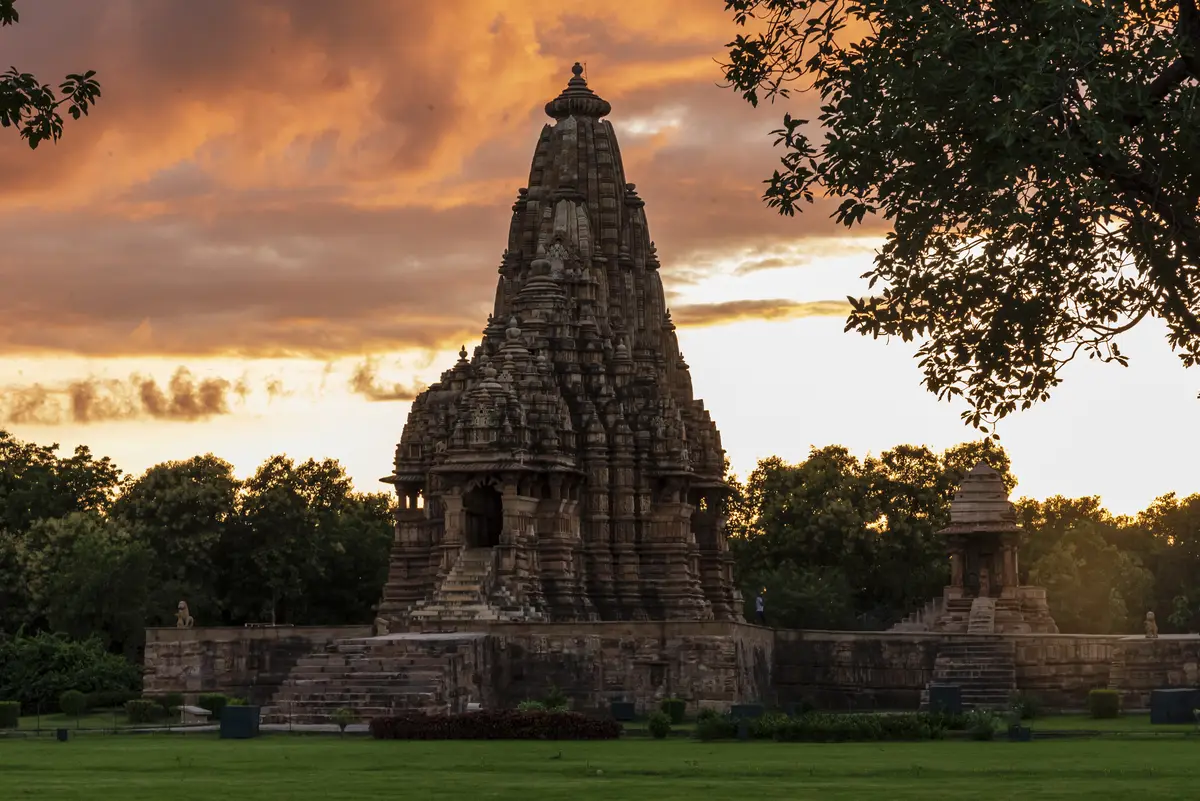
What exactly is the Khajuraho Group of Monuments, and where is it located?
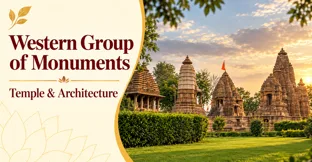
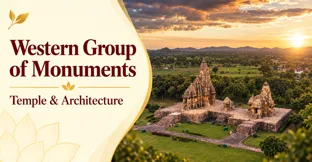
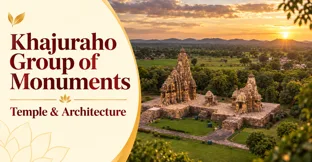
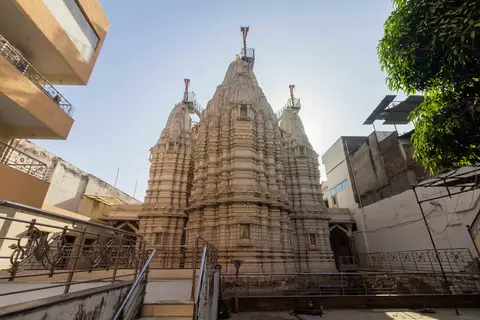
Khajuraho is a small, peaceful town located in the Chhatarpur district of Madhya Pradesh. It is world-famous for its cluster of Hindu and Jain temples built by the Chandela dynasty. These aren't just single shrines; they are massive architectural marvels spread across a wide area, divided into three main "groups" based on their location — the Western, Eastern, and Southern Groups.
What are the three main "Groups" of temples you need to visit?
To see Khajuraho properly, you need to visit
- The Western Group: The largest and most famous (requires a ticket).
- The Eastern Group: A mix of Hindu and beautiful Jain temples.
- The Southern Group: Smaller, quieter temples located a bit further away.
Is Khajuraho a UNESCO World Heritage site?
Yes. The entire ensemble (Western, Eastern, and Southern) was collectively inscribed as a UNESCO World Heritage Site in 1986. This status means the site follows strict international standards for conservation, making it one of the cleanest and most well-organized historical spots in India.
How many temples are still standing today?
History tells us there were once 85 magnificent temples here. Over centuries of natural wear and invasions, only about 25 temples remain across all groups today, in various stages of preservation. Each one is unique in its carving and story. In the Eastern Group alone, about 7 temples survive — 3 Hindu (Brahma, Vamana, and Javari) and 4 Jain (Parshvanatha, Adinatha, Shantinath, and the partially preserved Ghantai).
How to reach Khajuraho?
Khajuraho is well connected by air, rail, and road, making it accessible from major cities in India.
- By Air: The nearest airport is Khajuraho Airport, located around 5 km from the main temple complex. It has regular flights connecting to cities like Delhi and Varanasi.
- By Train: Khajuraho Railway Station is the nearest railway station, with connections to cities such as Delhi, Jhansi, and Kanpur. Alternatively, Jhansi Junction is a major railhead about 170 km away, with wider connectivity.
- By Road: Khajuraho is well connected by road to nearby cities like Jhansi, Satna, and Chhatarpur. Regular buses and taxis are available.
- Local Transport: Within Khajuraho, autos, taxis, and rented bicycles are easily available for commuting between different temple groups.
Western Group of Monuments
Who currently manages and maintains these temples?
Because these temples are of "National Importance" and hold global heritage value, they are managed by the Archaeological Survey of India (ASI). Unlike local parishads or private trusts, the ASI focuses on the preservation and structural integrity of the site.
Are these "Living Temples" where I can perform daily Puja?
This is a common point of confusion. Most of the temples in Khajuraho are "non-living," meaning there is no active deity or daily ritual inside. However, the Matangeshwar Temple (located just outside the Western Group boundary) is a "Living Temple" where thousands of devotees perform Abhishek and Puja every day.
What are the opening and closing timings for the Western Group?
Open from Sunrise to Sunset (approx. 6:00 AM to 6:00 PM) every day.
Is there an entry fee for Indian vs. Foreign tourists?
Yes, there is a tiered pricing system.
- Indian Visitors: ₹40
- Foreign Visitors: ₹600
- Children (under 15): Free
How can I book my tickets online to skip the queue?
You can skip the physical line by visiting the ASI PayUmoney portal https://asi.payumoney.com/ or scanning the QR codes placed outside the main gate. It is suggested booking your ticket 10 minutes before you arrive to avoid any network issues at the gate.
Does the ticket for the Western Group cover the Eastern and Southern groups as well?
Actually, the Eastern and Southern groups are mostly free to enter! Your paid ticket is specifically for the enclosed Western Group complex and the nearby museum.
Is there dedicated Parking available for private vehicles near the monuments?
Yes, there is a large, paid parking area right across from the Western Group entrance. For the other groups, parking is generally easier and often right near the temple gates.
Which temples are the "Must-Sees" within this fenced complex?
- 1. Lakshmana Temple: Built around 930–950 AD by King Yashovarman, this is one of the oldest and most intact temples, dedicated to Lord Vishnu. It is a Panchayatana temple, meaning the central shrine is surrounded by four smaller corner shrines. What to look for: the Vaikuntha Vishnu idol inside, with three heads — a human head in the center, flanked by a Lion (Narasimha) and a Boar (Varaha). Visitor perspective: It sits on a very high platform; elders can admire the famous "Lajja Gauri" and social scenes carved on the exterior base without climbing the steep stairs.
- 2. Kandariya Mahadeva Temple: Constructed between 1025 and 1050 AD by King Vidyadhara, this is the largest and most magnificent temple in Khajuraho, dedicated to Lord Shiva. The name means "of the cave" (Kandariya) and refers to Shiva (Mahadeva). The main spire (Shikhara) rises to 100 feet and is surrounded by 84 smaller spires, mimicking the peaks of Mount Kailash. There are nearly 900 sculptures on this temple alone — so dense and intricate they look like a tapestry in stone.
- 3. Devi Jagadambi Temple: Standing on the same massive platform as the Kandariya Mahadev, this temple was originally a Vishnu temple but later became a temple for Devi Parvati (Jagadambi). Because it is smaller, the carvings here are much closer to eye level. It is famous for some of the most beautiful and delicate Apsara (celestial maiden) sculptures in the world — a great "middle-ground" temple, not as crowded as Kandariya, but just as beautiful.
- 4. Chitragupta Temple: The only temple in Khajuraho dedicated to Surya Dev (The Sun God), built in the early 11th century. Inside the sanctum is a 5-foot-tall idol of Surya riding a chariot pulled by seven horses. It faces the East perfectly, so in the early morning the sun rays directly enter the sanctum to "greet" the deity.
- 5. Vishvanatha & Nandi Temple: Built by King Dhanga in 999 AD, dedicated to Lord Shiva as "Lord of the Universe." Directly facing the main temple is a separate, open shrine containing a massive monolithic Nandi Bull (6 feet tall), carved from a single block of stone and highly polished — a grounding spot for a silent prayer.
- 6. Lalguan Mahadev Temple: Located beside the Lalguan Sagar Lake, this Shiva temple represents a vital link in Khajuraho's architectural history. Built using a combination of granite and sandstone, it belongs to the early "transitional" phase of temple construction and is one of only two temples in the region that faces West. It features a unique pyramidal superstructure with receding stone tiers, and a large weathered Nandi stands in front. A quiet, contemplative stop with a serene lakeside setting.
- Other Important Monuments in the Western Group:
- Varaha Shrine: In front of the Lakshmana Temple, an open pavilion housing a giant, 9-foot-long monolithic Varaha (Boar), carved with 674 miniature figures of the Hindu pantheon.
- Matangeshwar Temple: Just outside the ASI gate, the only active temple where you can perform a Puja, housing a massive 8-foot-tall Shivlinga. Highly recommended for elderly pilgrims who want to perform an actual ritual.
- Chausath Yogini Temple: The oldest temple in Khajuraho (9th Century), made of granite rather than sandstone, dedicated to the 64 yoginis (attendants of Goddess Kali). An open-air, rectangular structure.
- Parvati Temple: South-east of the Vishvanatha Temple, a modest shrine originally dedicated to Vishnu, now housing a nearly five-foot-tall stone image of Gauri (Parvati) seated on an iguana (godha).
Can I perform a Puja or Aarti in the Western Group temples?
Most Western Group temples are protected monuments under the ASI and are not active places of worship, so regular puja or aarti is not performed in them. However, the Matangeshwar Temple is an exception — the only active temple in the complex where devotees can participate in daily rituals, offer prayers, and perform simple puja like jal abhishek.
Is the Western Group complex wheelchair accessible?
The Western Group is partially accessible. The complex has paved pathways and ramps that allow movement between temples to a certain extent, and entry areas and open courtyards are generally easier to navigate. However, most temples are built on raised platforms with steps, so direct access inside is limited, and some areas may require assistance due to uneven surfaces or slopes. A hydraulic lift has been installed at the Kandariya Mahadev Temple to help wheelchair users and elderly visitors reach the platform level.
Are mobile phones and cameras allowed inside?
Yes, mobile phones and cameras are allowed. Visitors are generally free to photograph the open areas and monuments. As these are protected ASI sites, follow basic guidelines: avoid touching or climbing on sculptures; do not use tripods or professional equipment without permission; and respect the sanctity of the Matangeshwar Temple, where photography should be done sensitively during worship.
To whom should I reach out if I need assistance or a guide?
Approach the on-site staff of the ASI for any immediate assistance or emergencies within the complex. For guided tours, authorized local guides are usually available near the entrance of the Western Group — it is advisable to hire registered guides for accurate information. In case of a medical or general emergency, you can also seek help from security personnel stationed at the site or local authorities and nearby facilities in Khajuraho town.
To whom can I make a donation if I want to help?
As these are ASI monuments, there are no donation boxes inside. However, you can contribute to the local Matangeshwar Temple Trust or the Jain temple management in the Eastern Group. Your money goes toward maintaining the daily rituals and local community service.
Annual Event — day and date
- Khajuraho Dance Festival (The Big Event): The most famous event, where world-class classical dancers perform in front of the illuminated temples. It's a 7-day festival held every year in late February (in 2026 it was held from February 20 to February 26). It usually takes place at the Western Group (near the Chitragupta and Vishvanatha temples) — an open-air event with the 1,000-year-old temples lit up in the background.
- Maha Shivaratri (The Spiritual Event): Since many temples here are dedicated to Lord Shiva, Shivaratri is a huge occasion, especially at the active Matangeshwar Temple. Thousands of pilgrims arrive and a massive "Mela" (fair) takes place. In 2026 it falls on Sunday, February 15. Unlike the sophisticated dance festival, this is raw and traditional, with rituals, night-long prayers, and a lively local fair outside the temple gates.
Daily Event — Light and Sound Show
Every evening at the Western Group, a 50-minute show narrated by Amitabh Bachchan explains the history of the Chandela kings and how the temples were built. Timings vary slightly by season, usually starting around 6:30 PM for the English show and 7:40 PM for the Hindi show.
Eastern Group of Monuments
Who currently manages and maintains these temples?
The Shri Digambar Jain Atishay Kshetra Khajuraho Prabandh Committee is the primary trust responsible for managing the active religious life of the Jain temples within the Eastern Group. While the ASI oversees the structural conservation of the ancient monuments, this local committee handles the daily administration, religious rituals, and maintenance of the "living" sections, such as the Shantinath Temple and the nearby Jain museum. Their administrative office is right at the entrance of the Jain temple cluster, and their role is officially recognized by the Madhya Pradesh Tourism department.
Are these "Living Temples" where I can perform daily Puja?
Here most of them are monuments, but the Shantinath Temple (Eastern Group) is an active place of worship for the Jain community.
What are the opening and closing timings for the Eastern Group?
These temples are generally open from Sunrise to Sunset (approx. 6:00 AM to 6:00 PM).
Is there an entry fee for Indian vs. Foreign tourists?
Unlike the Western Group, most temples in the Eastern and Southern groups are free to enter as they are not within a single fenced enclosure.
How can I book my tickets online to skip the queue?
For the Eastern Group, there is no entry fee. Both Indian and foreign tourists can explore these temples free of charge, so no online booking is needed.
Is there dedicated Parking available for private vehicles near the monuments?
Yes, but it's more informal. Unlike the large lot at the Western Group, you can usually park your private vehicle or auto-rickshaw near the entrance of the individual temple clusters.
Which temples are the "Must-Sees" within this complex?
- Brahma Temple: Although called the Brahma temple, it's actually dedicated to Lord Shiva (you'll see a four-faced Linga inside). One of the oldest in Khajuraho, it stands out because it's built using both granite and sandstone, unlike the others which are pure sandstone.
- Vamana Temple: Dedicated to the dwarf incarnation of Vishnu, this temple feels "confident yet restrained." It's famous for having two bands of sculptures instead of the usual three. Look closely inside and you'll find a carved image of Buddha — a beautiful reminder of how inclusive and open-minded religious life was back then.
- Javari Temple: Small but incredibly elegant. The must-see detail is the entrance porch, flanked by stunningly carved Makara (mythical sea creatures) figures. It's often called one of the most "accomplished" examples of architecture in town because of its perfect proportions.
- Parshvanatha Temple: The "star" of the Eastern Group, famous for sculptures showing everyday human moments — a woman applying eye makeup, writing a letter, or removing a thorn from her foot. It was likely originally built for Adinatha (look for the bull symbol) but later rededicated. The best place to see how Jain and Hindu artists shared the same creative "language."
- Adinatha Temple: Only the inner sanctum and vestibule of the original structure remain, but they are stunning. The three bands of dancing female figures (apsaras) on the outer walls are carved with such ease and grace that they seem almost alive.
- Ghantai Temple: Though mostly in ruins, it is famous for its name, from the "Ghantai" (bell and chain) motifs carved into the pillars. Even as a ruin, the "pearl and bell" carvings are so delicate they look like they belong in a jewelry box.
- Shantinath Temple: The modern face of ancient Khajuraho. A "living" temple with a massive 14-foot-tall statue of a Tirthankara — a powerful experience to stand at the feet of such a giant, polished stone figure while people are actively praying around you.
Can I perform a Puja or Aarti in the Eastern Group?
Yes. Unlike the Western Group, which feels more like a museum, the Eastern Group is home to "living" temples. Specifically, at the Shantinath Temple, you can participate in daily Jain rituals. The temple is managed by the Shri Digambar Jain Atishay Kshetra Khajuraho Prabandh Committee, and they welcome visitors to observe or join the morning and evening Aarti. Remember to follow the traditional decorum: leave your shoes and any leather items (belts, wallets) at the entrance, and maintain a peaceful silence while inside.
To whom can I make a donation?
If you'd like to contribute to the upkeep of these historic sites, reach out to the Shri Digambar Jain Atishay Kshetra Khajuraho Prabandh Committee, which has a dedicated administrative office right at the entrance of the Jain temple cluster. While the ASI handles structural conservation of the ancient ruins, this local trust manages the daily running of the active temples, the pilgrims' guesthouses, and the onsite Jain museum. They usually provide an official receipt for any donations made toward maintenance or community welfare projects.
Is the Eastern Group complex wheelchair accessible?
It is partially accessible. While the paths leading to the temples are relatively flat, the temples themselves are built on high platforms (Jagati) with steep stone steps that are not wheelchair-friendly.
Are mobile phones and cameras allowed inside?
Yes, mobile phones and cameras are allowed for personal photography. However, tripods and professional video equipment require prior permission from the ASI.
To whom should I reach out if I need assistance or a guide?
Authorized guides are usually found near the Western Group entrance. It is best to hire one for the full day to take you through all three groups. You can also contact the Madhya Pradesh Tourism (MPT) office in town.
Annual Event — day and date
Since the Eastern Group is the heart of the Jain community in Khajuraho, Mahavir Jayanti is the biggest day of the year here. In 2026, Mahavir Jayanti falls on March 31st.
What to expect on this day
- The Shobha Yatra: A grand, colorful procession where an idol of Lord Mahavira is carried through the streets on a beautifully decorated chariot.
- Temple Decorations: The Jain temples, especially the Shantinath temple, are decked out in fresh flowers and traditional flags.
- Special Rituals: You'll see the Abhisheka (ritual bathing of the idol) and hear soulful bhajans (devotional songs) echoing through the complex all day.
- Community Spirit: It's a day of charity and massive community meals. Even if you aren't a follower of Jainism, the atmosphere of peace and celebration is something you shouldn't miss if you're in town during late March.
Southern Group of Monuments
What exactly is the Southern Group?
The Southern Group is the most isolated cluster of Khajuraho, located about 4–5 kilometers from the main town. It features two major temples — Dulhadeo and Chaturbhuj — which represent the final flourish of Chandela architecture.
Who currently manages the Southern Group of Monuments?
The Southern Group is managed and maintained by the Archaeological Survey of India (ASI). As protected monuments of national importance, these temples are conserved under ASI's supervision, which is responsible for their preservation, maintenance, and visitor management.
Are these "Living Temples" where I can perform daily Puja?
No, not officially. They are protected historical monuments, so there are no resident priests or scheduled daily rituals. However, at Dulhadeo, you'll often see locals leaving flowers for Lord Shiva.
What are the opening and closing timings for the Southern Group?
Sunrise to Sunset (approx. 6:00 AM – 6:00 PM). Pro Tip: Save Chaturbhuj for the very end of your day.
Is there an entry fee for Indian vs. Foreign tourists?
No, entry is free. Unlike the Western Group, the Southern Group of Monuments (which includes the Dulhadeo and Chaturbhuj temples) currently does not have an entry fee for either Indian or Foreign tourists.
How can I book my tickets online to skip the queue?
Unlike the Western Group, the Southern Group does not require an entry ticket. Visitors can access the temples directly, with no need for advance or online booking.
How to reach the Southern Group of Monuments?
The Southern Group is about 4–5 kilometers from the main Khajuraho market. Because it's a bit of a trek, you won't want to rely on walking. The three best ways to get there:
- Auto-Rickshaw: The easiest way to reach the Dulhadeo and Chaturbhuj temples. Hire an auto for a round trip from the town center; expect around ₹200–₹300, with the driver waiting while you explore.
- Bicycle: A fantastic option for a bit of adventure, costing roughly ₹50–₹100 per day. The flat, easy ride takes you through the quiet, leafy outskirts of the village and past local fields.
- Scooter or Bike Rental: For more speed without the exertion, rent a scooter for about ₹500–₹600 per day — perfect if you plan on combining the Southern Group with nearby Raneh Falls or the Panna outskirts.
Which temples are the "Must-Sees" within the Southern Group?
- Dulhadeo Temple: The youngest temple in all of Khajuraho (built around 1100–1150 AD), dedicated to Lord Shiva; its name means "Holy Bridegroom." Inside the sanctum, the Shiva Linga has 999 tiny lingas carved onto its surface — circling this one linga is said to equal circling a thousand. The exterior is famous for flying figures and celestial dancers, in a more angular, modern carving style than the older Western Group temples.
- Chaturbhuj Temple: If you only have time for one temple in the south, make it this one. It houses a massive 9-foot-tall statue of Lord Vishnu with four arms (Chaturbhuj), so detailed it looks like the deity is about to step out of the stone. Unusually, it faces West — in the late afternoon, the sun shines directly through the door, bathing the giant idol in golden light. The most peaceful "sunset spot" in town.
- Beejamandal Temple Ruins: A "bonus" site for the adventurous — an active excavation mound. Archaeologists believe that once fully uncovered, this temple will be larger than the Kandariya Mahadev (the biggest in the Western Group). For now, it's a massive stone platform covered in beautifully carved ruins — a raw, unfinished look at how these temples were originally built.
Is there dedicated Parking available for private vehicles near the monuments?
There is no prominently designated parking facility for the Southern Group. However, visitors can usually park near the approach roads or in nearby open areas, as the site is less crowded.
Can I perform a Puja or Aarti in the Southern Group?
No, you cannot perform a formal Puja or Aarti here. Since these are protected archaeological monuments, there are no resident priests or scheduled religious ceremonies. While you are welcome to offer a quiet, personal prayer or a few flowers, traditional rituals with incense or loud chanting are not permitted.
Is the Southern Group complex wheelchair accessible?
The Southern Group is partially accessible, as visitors can reach the temples easily by road and move around the open surroundings. However, the temples themselves are built on elevated platforms with steps, which limits direct wheelchair access.
Are mobile phones and cameras allowed inside?
Yes, mobile phones and cameras are allowed. Visitors can photograph the temple surroundings and the monuments. As these are protected ASI sites, follow basic guidelines: avoid touching or climbing on the structures; do not use tripods or professional equipment without prior permission; and maintain the decorum of the site.
To whom should I reach out if I need assistance or a guide?
You won't find guides waiting here. Hire a guide at the Western Group entrance and ask them to accompany you to the Southern Group of monuments.
To whom can I make a donation?
Since the Southern Group temples are protected by the ASI and are not active religious centers, there are no official temple trusts or donation boxes (Hundis) on the premises. If you wish to contribute to their preservation, you can donate to the National Culture Fund (NCF) or specialized heritage NGOs that work with the government on conservation. The official link is: https://ncf.nic.in/. You might occasionally see small, informal offerings left by local devotees at the Dulhadeo Temple.