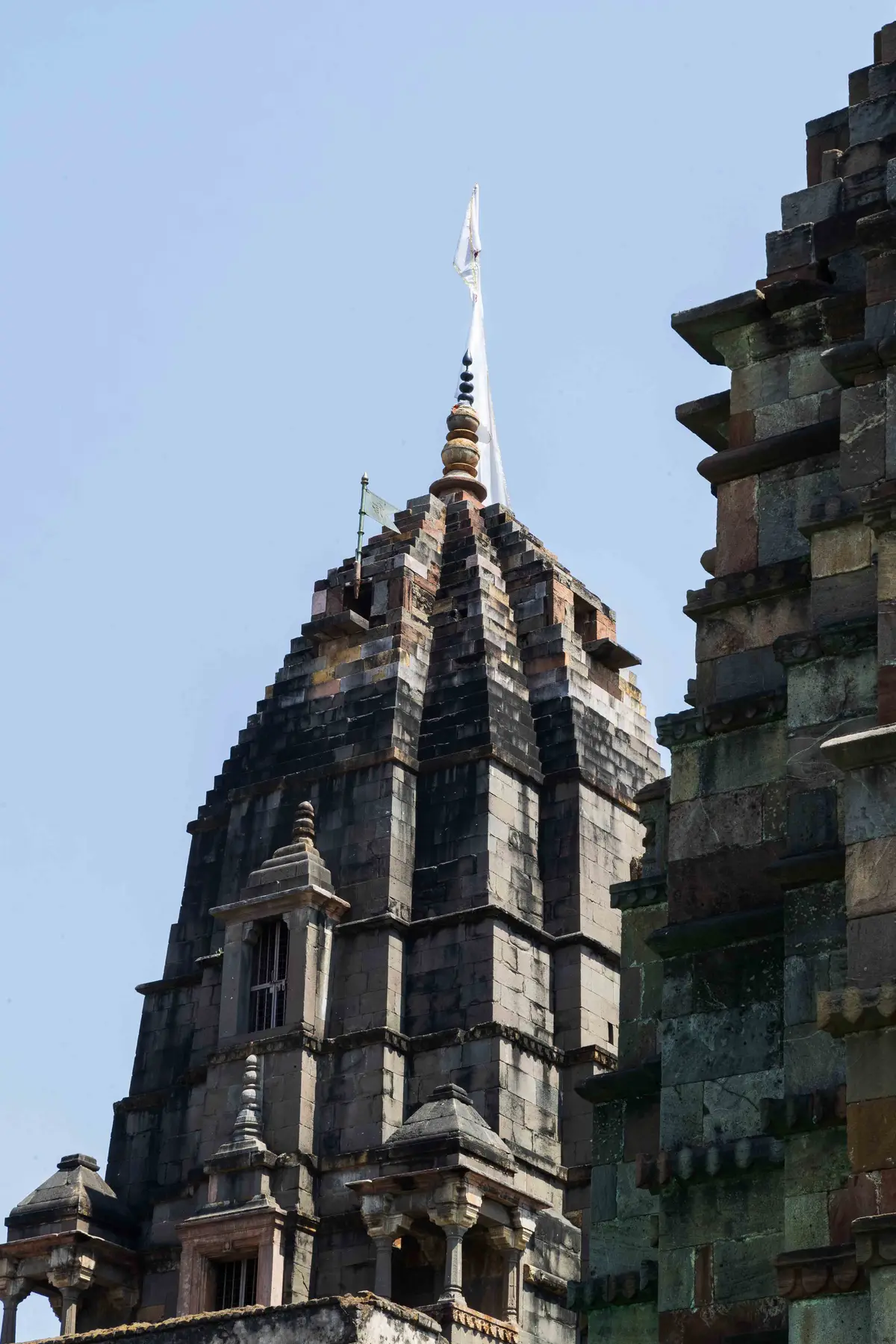
Popular Temples

Mamleshwar Temple, Omkareshwar

Mamleshwar Temple, Omkareshwar
🕉️
Main Deity
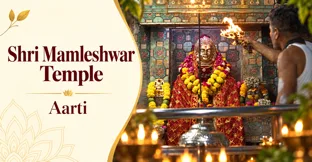
The principal deity worshipped in the temple is Lord Shiva, enshrined in the form of a sacred Shivling known as Mamleshwar Mahadev. The temple holds deep religious importance as it is traditionally regarded as forming one part of the revered Jyotirlinga of Omkareshwar Temple. Devotees believe that visiting both temples completes the pilgrimage.
Contact
Please visit temple website
Full Address
Shri Mamleshwar Mandir Prabandhan Samiti

Condensed Information:

1. Main Deity

The principal deity worshipped in the temple is Lord Shiva, enshrined in the form of a sacred Shivling known as Mamleshwar Mahadev. The temple holds deep religious importance as it is traditionally regarded as forming one part of the revered Jyotirlinga of Omkareshwar Temple. Devotees believe that visiting both temples completes the pilgrimage.

2. Other Deities (Sub Deities)

Within the temple complex, there are smaller shrines dedicated to deities such as Goddess Parvati, Lord Ganesha, and Nandi.

General Days

Opening Timings: 5:00 AM

Closing Timings: 10:00 PM

Special Days (Festivals and Utsavas)

On important occasions such as Mahashivratri, Shravana month and other temple facilities, the temple generally remains open for longer hours. The timings of worship and darshan may change during festivals and special occasions.

The daily worship at Mamleshwar Temple follows a structured sequence of rituals performed throughout the day.

  • Mangal Aarti: Begins at 5:00 AM - 5:30 AM
  • Darshan: 05:30 AM - 12:00 PM

12:30 PM - 07:30 PM

08:30 PM - 10:00 PM

  • Apranha Aarti: 12:00 PM - 12:30 PM
  • Sewa: 07:30 PM - 08:00 PM
  • Sayamkalin Aarti: 08:00 PM - 08:30 PM

After this the temple closes for the day. These timings may vary during special occasions.

4. Entry Fees

There is no entry fee for general darshan

5. Location & How to Reach

Located in Omkareshwar, on the southern bank of the Narmada River, opposite the Omkareshwar Temple.

  • By Air: Nearest airport is Devi Ahilya Bai Holkar Airport, Indore (approximately 80 km)
  • By Train: Nearest railway station is Omkareshwar railway station. A small station near Mortakka village.
  • By Road: Well connected by road from Indore and Khandwa.
6. Special Poojas/ Rituals

Apart from the daily rituals, the temple observes a series of important religious events throughout the year. Regular Abhishek Pujan is performed every Monday in the month of Chaitra, while the month of Shravan is marked by special processions known as Maha Savari. Festivals such as Ganga Dussehra, Guru Purnima, Narmada Jayanti, Diwali, and Mahashivratri are celebrated with special poojas and prasad distribution. These occasions attract a large number of devotees and enhance the spiritual atmosphere of the temple. Special poojas like Rudrabhishek and Abhishek can be performed by devotees by paying a nominal fee. The charges may vary depending on the type of ritual and offerings involved. Advance booking is generally not required, and arrangements can be made directly at the temple through the priests.

Any online service exists for serving the customers? If yes by whom?

Mamleshwar Temple has an official website managed by the temple’s Prabandhan Samiti, where basic information and contact details are available. However, most services such as pooja bookings and arrangements are handled offline at the temple premises.

Any specific Dress Code prescribed for entry to the place – men / women / for special pooja and festival days?

There is no strict dress code enforced, but devotees are expected to wear modest and traditional attire while visiting the temple. During special poojas and festivals, people generally prefer traditional clothing as a mark of respect.

Are Electronic Gadgets allowed?

Mobile phones are generally allowed inside the temple premises, but their use is expected to be minimal, especially during aartis and rituals. Photography is restricted in certain areas.

For safety and convenience, devotees are advised to avoid carrying unnecessary electronic items. Basic storage facilities may be available in nearby shops or local arrangements, though there is no formal centralized deposit system within the temple.

Is Photography allowed? If yes, any fee prescribed?

Photography is allowed only in the outer premises of Mamleshwar Temple. It is strictly prohibited inside the sanctum (garbhagriha). No specific fee is prescribed, but visitors must follow temple guidelines.

Is there a LIFT / Elevator or any other facility for the physically handicapped?

The temple does not have a lift or elevator facility. Visitors may need to use steps to access the main areas.

Facility of WheelChair for elderly and physically challenged?

At Mamleshwar Temple, there is no dedicated wheelchair facility provided within the temple premises.

However, a free wheelchair service is available through the Shri Omkareshwar Temple Trust at the Yatri Suvidha Kendra near Jhula Pul in Omkareshwar. The service is completely free, and they often have staff or volunteers available to assist in pushing the wheelchair if the devotee is traveling alone.

Special entry / Special Timing of Darshan for Sick / Senior Citizens / Physically Challenged persons?

There is no officially designated special entry or separate darshan timing for senior citizens or differently-abled devotees. However, temple staff may provide assistance on request, especially during non-peak hours.

Is Vehicle Pooja Performed. If yes what time? Cost?

Yes, there is no official 'Vehicle Pooja' booking counter at the temple; many pilgrims perform this ritual in the private parking areas near the Mamleshwar temple. Local priests are usually available at the parking lots to assist with the ceremony for a nominal fee.

Does the temple provide accommodation facilities to the pilgrims?

Mamleshwar Temple itself does not provide a dedicated accommodation facility for pilgrims. However, visitors have several stay options in nearby Omkareshwar town, ranging from budget dharamshalas to comfortable hotels. The Shri Omkareshwar Temple Trust manages affordable guest houses, while options like MPT Temple View offer well-maintained rooms with views of the Narmada River. In addition, places such as Shree Gajanan Maharaj Sansthan, Bhakt Niwas provide clean AC and non-AC rooms with basic facilities. Accommodation prices generally range from ₹500-₹800 for simple dharamshalas to ₹1,500-₹3,500 for hotel rooms. Trust-run properties can be booked through official temple websites, while private hotels and resorts are available via travel platforms or on arrival.

What is the parking place for those who come by cars, mini bus and two wheelers?

Parking is well-organized with specific zones based on your vehicle type. For those coming in cars or two-wheelers, the Kashivishwanath Parking is the most convenient as it is located very close to the Mamleshwar side. If you are traveling in a mini-bus or a large group, you should head to the New Bus Stand Parking or the Bramhapuri Parking, which are designed to handle larger vehicles with a capacity of more than 300. Keep in mind that during major festivals, the city often becomes a "no-vehicle zone," so you might need to park in these outer lots and take a local e-rickshaw to the temple entrance.

Temple Prashad services- Meals- procedure, payments if any, different class/lines? How to buy the ticket, if needed and timings?

There is no separate meal system inside Mamleshwar Temple itself. However, devotees can have prasad meals at the nearby Omkar Prasadalaya, managed by the Shri Omkareshwar Temple Trust.

Meal coupons can be purchased directly at the counter, and an online booking facility is also available through the official website for those who prefer planning in advance. The system is simple and follows a regular queue, with no separate class-based lines.

Timings

Lunch (Full Thali): 10:00 AM to 3:00 PM

Dinner (Khichdi): 5:00 PM to 9:00 PM

What is the procedure for reporting items lost in a temple?

At Mamleshwar Temple, there is no formally structured or documented lost-and-found system mentioned. If you happen to lose something, the first step is to report it to the Temple Management Office (Prabandhan Samiti) located within the temple complex. They maintain a register for lost and found items. You can also reach out to the Samvad Setu Helpline at +91 89899 98686 (available 8 AM to 8 PM) for assistance. For a more formal report, or if the item is valuable (like a phone or gold jewelry), you should visit the Omkareshwar Police Station.

If any one of the group members is missing, how to report and where to wait?

In the event that a group member goes missing, you should immediately head to the Public Announcement (PA) System booth. While the main announcement hub is near the Omkareshwar temple, there are speakers and small assistance points near the Mamleshwar entrance where you can request an announcement. The best place to wait for a missing person is the Yatri Suvidha Kendra (Traveler Facility Center) near the Gomukh Ghat/Mamleshwar side, as it serves as a central landmark that is easy for anyone to find. It is a good practice to tell your group members beforehand to meet at the Mamleshwar Temple Main Gate or the Narmada Ghat if they get separated, as these are prominent and less confusing meeting points.

Is this temple registered under the state govt/District administration? Provide if the information is visible on the site?

The Mamleshwar Temple is an Ancient Monument of National Importance and is protected by the Archaeological Survey of India (ASI) due to its historical and architectural significance. However, the daily religious administration and facilities are managed by the Shri Omkareshwar Temple Trust, which functions under the oversight of the District Administration of Khandwa, Madhya Pradesh. The District Collector serves as the ex-officio Chairman of the Trust.

How can one make Donations, (apart from Hundi offerings in the temple) to whom and which bank account and for what all purposes?

Apart from the Hundi offerings at Mamleshwar Temple, donations can be made through the Shri Mamleshwar Temple Management Committee (Mandir Prabandhan Samiti).

As per the official website, all donations are deposited into a joint bank account operated in the name of “Shri Mamleshwar Temple Management Committee, Omkareshwar.” This account is jointly managed by senior administrative authorities such as the Collector, Khandwa and Commissioner, Indore Division (or their representatives).

The funds are utilized for temple maintenance, development of public facilities, preservation of the temple premises, and management of religious activities and services for devotees. Regular accounts and audits are maintained by the committee to ensure proper use of donations.

Are there any privileges associated with the donation made? For eg. in Tirupati donations to SriVani trust is used for construction of Balaji temples and for every 10k donation one Spl entry ticket is provided with also access to preferential treatment in allotment of quality accomodation maintained by the temple.Similarly in Shirdi donation can be made for Annadana( free meals) and for hospitals etc.

At Mamleshwar Temple, there are no specific privileges or special darshan benefits officially linked to donations, unlike larger temple systems such as Tirupati or Shirdi.

As per the available information on the temple’s official platform, donations are primarily used for maintenance of the temple, development of facilities, and management of religious activities. The system focuses more on collective benefit for devotees rather than providing individual privileges or priority access in return for donations.

Provide Construction/ scientific information about the temple?

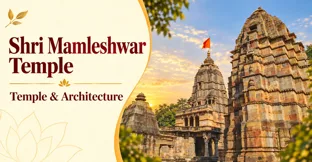
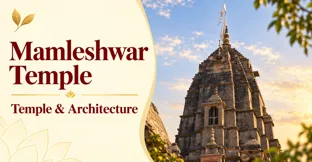
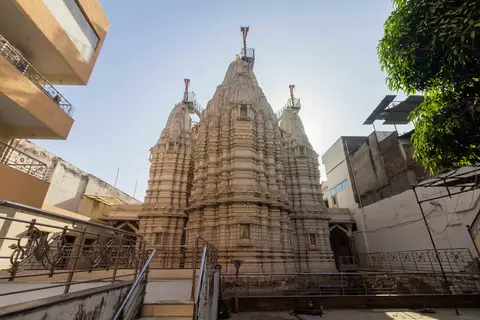
The Mamleshwar Temple is an architectural masterpiece of the Nagara style, primarily constructed in the 10th and 11th centuries by the Paramara dynasty and later restored by the Holkar family. Built from sturdy red sandstone, the temple employs an ancient interlocking stone technique without the use of mortar or cement, a method that has allowed the structure to withstand centuries of seismic activity and river shifts in the Narmada valley. Scientifically, the temple's star-shaped or "Ashta-Mukhi" foundation provides incredible structural stability, while the precise interior geometry of the Garbhagriha (Sanctum) is designed to amplify the acoustic resonance of Vedic chants. A unique historical and scientific feature is the Mahimna Stotra (hymns to Lord Shiva) engraved on the temple walls, which dates back to 1063 AD. These inscriptions serve as a vital record for linguists and historians. Today, the temple is recognized as a Protected Monument under the Archaeological Survey of India (ASI), ensuring that its ancient architectural integrity and intricate carvings are preserved for future generations.

Is there any special significance attached to the temple -like for eg. Kasar Devi in Uttar khand- it is said-

In the realm of Sacred Geography, Mamleshwar is often compared to high-energy Geomagnetic sites like Kasar Devi due to its unique positioning on the southern bank of the Narmada. While the island temple represents the Akapala or celestial vibration, Mamleshwar is the Parthiv-Linga, the terrestrial manifestation of the Jyotirlinga. Archaeologically and spiritually, the site is recognized as a "Pancha-Ratha" structure (five-fold offset plan), which symbolic traditions suggest acts as a conduit for Telluric currents (earthly energy). This is further intensified by the perennial reverse-flow (pashchim-vahini) of the Narmada, which creates a natural electromagnetic vortex at this specific latitude. According to the Puranic tradition, the Jyotirlinga is Dvibhaaga (divided into two), making Mamleshwar the "Amaleshwar" or the pure, grounding element of the pilgrimage. This profound energy-density was the primary reason Maharani Ahilyabai Holkar designated this site for the Parthiv-Archana, a continuous ritual involving thousands of hand-molded clay lingams to maintain the spiritual and ecological equilibrium of the region.

Information which a foreigner would like to know- focussing more on spirituality rather than religion.

For an international visitor, Mamleshwar Temple is often experienced as the quieter side of the Omkareshwar pilgrimage. While the main temple across the river is usually crowded and active, Mamleshwar feels calmer and more suitable for spending time in silence.

The temple’s location on the banks of the Narmada River adds to this peaceful atmosphere. Many visitors prefer to sit quietly, observe the surroundings, and take in the steady rhythm of daily rituals, bells, and chanting. Even without understanding the religious practices, the space allows for simple reflection and stillness.

For a foreigner, the experience here is less about following rituals and more about being present in a place that has been in continuous use for centuries. It offers a sense of continuity and calm, making it a good place for quiet observation and personal reflection.

Exemption available under Income tax act - 80G etc for the donation made. For eg. Donation to the Anna dana at Shirdi is eligible for 100%/50% exemption.

Visitors planning to visit Mamleshwar Temple can use the following links and options:

Annual Event of the temple day and date

The main annual event at Mamleshwar Temple is Mahashivratri, a major Hindu festival dedicated to Lord Shiva. This festival falls on the Falgun Krishna Chaturdashi, which usually corresponds to February or March in the Gregorian calendar.

Mahashivratri is celebrated with great devotion at the temple, with special poojas, Abhishek, and extended darshan hours. A large number of devotees visit the temple on this occasion to offer prayers and seek blessings.

Important Details

Event: Mahashivratri

Date: Varies each year (February–March, based on lunar calendar)

Activities: Special poojas, Abhishek, extended darshan, and increased devotee participation

For exact dates and updated details, visitors can refer to the official website: www.shrimamleshwar.org

Other Key Events

The temple also observes several other important festivals as per its official calendar:

Shravan Maas (Every Monday): Special poojas and “Shravan Somvar Savari” are organized during the month of Shravan

Ganga Dussehra: Celebrated with special pujan of Maa Narmada and distribution of prasad

Sharad Purnima: Marked by special rituals and distribution of milk prasad

Diwali: Celebrated with Deep Pujan at the temple

Narmada Jayanti: Special pooja and prasad distribution.

Monthly Event of the temple - day and date

The temple observes regular monthly events primarily based on the Hindu lunar calendar and weekly significance of Lord Shiva. The most important recurring observance is on every Monday (Somvar), which is considered especially auspicious for Shiva worship.

During these days, devotees visit the temple in larger numbers to perform Abhishek and special pooja. The significance of Mondays increases further during the month of Shravan, when each Monday is celebrated with special rituals and processions.

Important Details

Event: Somvar (Monday Worship)

Day: Every Monday

Activities: Abhishek, special pooja, increased darshan

Other Monthly Observances

The temple also observes important tithis from the Hindu calendar, including

Ekadashi: Special pooja and religious observances

Purnima (Full Moon): Rituals and devotees participation

Amavasya (New Moon): Special prayers and offerings

Experience Divine Darshan

Immerse yourself in the spiritual essence of this sacred temple through our 360° VR experience.

Download Divya Darshan 360 App