
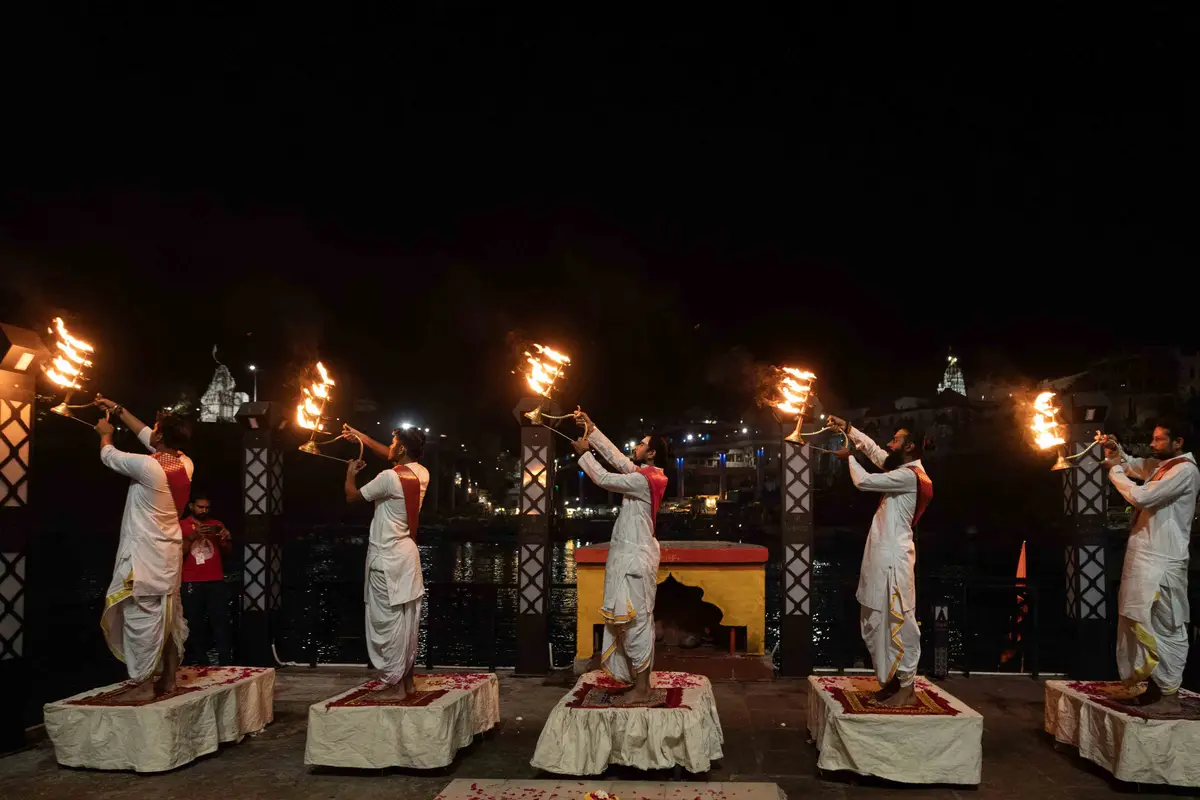
Why devotees come here
Every evening, priests offer aarti to the Narmada at Koti Tirth Ghat in Omkareshwar, Madhya Pradesh, right in front of the Jyotirlinga temple. Watching is free and open to all. Families who wish to perform the aarti themselves can book it through the Shri Omkareshwar Mandir Trust.
The Narmada, also called Rewa or Mekal Kanya, is the largest river of central India. With the Ganga, Yamuna, Godavari and Kaveri, it is counted among the five holiest rivers. The Puranas tell that the Ganga, burdened by the sins of so many bathers, took the form of a black cow and bathed in the Narmada to become pure again. The Narmada is also the only river that devotees walk around. The Narmada Parikrama covers about 2,600 km, and Omkareshwar is the only Jyotirlinga on its route.
At Omkareshwar the river splits into two streams around an island, the Vaidurya Mani Parvat, where the Jyotirlinga stands. The wide, shallow northern stream is seen as the Kaveri. The narrow, deep southern stream is the Narmada.
Koti Tirth Ghat, directly in front of the main temple, is the most important ghat here. A dip at this spot is believed to bring the merit of a crore of pilgrimages. Each evening the priests offer aarti to the river, and devotees set small lamps afloat, a practice called deepdaan.
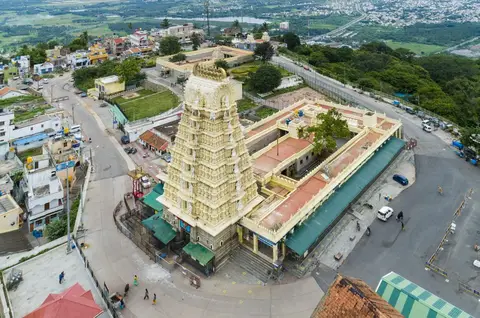 In the appChamundeshwari Temple, MysuruChamundi Hill, Mysuru, Karnataka
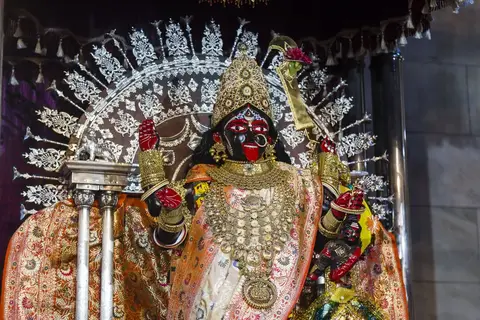 In the appDakshineswar Kali Temple, KolkataDakshineswar, North 24 Parganas, near Kolkata, West Bengal
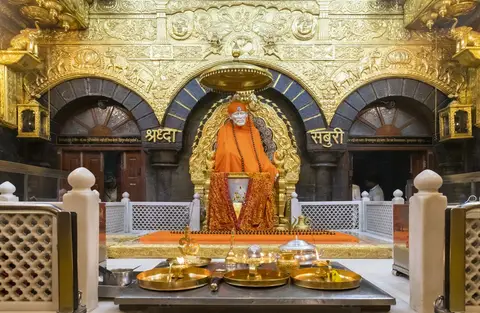 In the appShirdi Sai Baba Temple, MaharashtraShirdi, Rahata taluka, Ahilyanagar district, Maharashtra
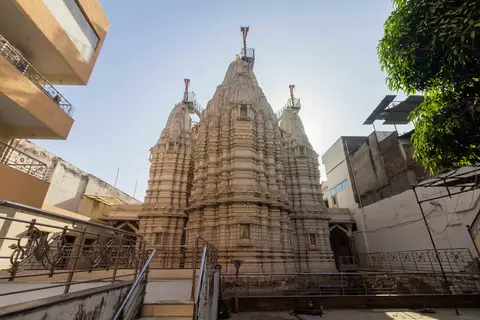 In the appAvanti Parshwanath Jain Tirth, UjjainDani Gate, Ujjain, Madhya Pradesh
 In the appBelur Math, West BengalBelur, Howrah district, West Bengal
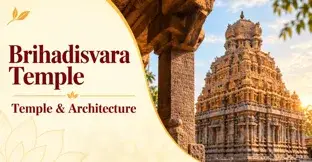 In the appBrihadeeswara Temple, ThanjavurThanjavur, Thanjavur district, Tamil Nadu
 In the appGwarighat Narmada Ghat, JabalpurGwarighat, Jabalpur, Madhya Pradesh