

Why devotees come here
Peer Kho Cave Temple stands on the banks of the River Tawi in Jammu city, in Jammu and Kashmir. It was built as a shrine for the Peer saint Siddha Ghareeb Nath, and the cave beside it is believed to be the meditative abode of Jamvant, the bear king of the Ramayana.
The temple is one of the old temples of Jammu, known as the City of Temples. It was built as a shrine for the revered Peer saint Siddha Ghareeb Nath. Local belief holds that the cave beside it was a meditative abode of Jamvant, the bear king and devotee of Shri Rama in the Ramayana.
According to historical records, the temple's origins go back to the 15th century, in the reign of Raja Ajaib Dev. The whole temple sits on a raised artificial platform, which protects it from the flooding of the Tawi in the rainy season. The courtyard is marked by three shikharas, spires that blend modern and ancient styles.
The dome, painted with work that reflects Mughal and Dogra influences, is the gateway to the cave. Inside the premises, a Devi temple has a white marble shrine with images of Devi. A shrine at the centre of the temple emits smoke continuously, which is one of its unique features.
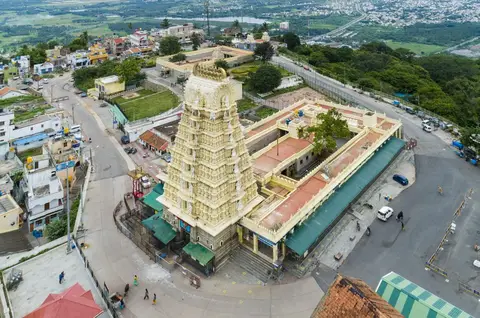 In the appChamundeshwari Temple, MysuruChamundi Hill, Mysuru, Karnataka
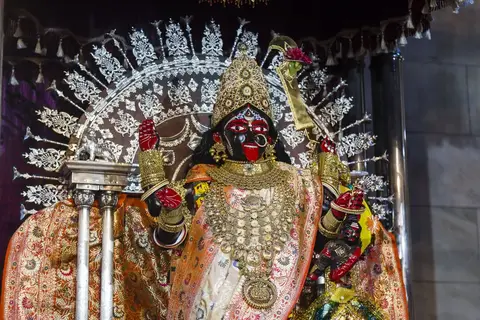 In the appDakshineswar Kali Temple, KolkataDakshineswar, North 24 Parganas, near Kolkata, West Bengal
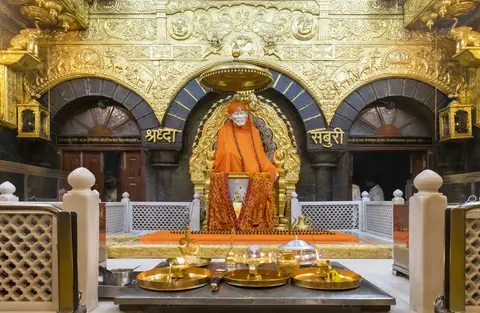 In the appShirdi Sai Baba Temple, MaharashtraShirdi, Rahata taluka, Ahilyanagar district, Maharashtra
 In the appBelur Math, West BengalBelur, Howrah district, West Bengal
 In the appBrihadeeswara Temple, ThanjavurThanjavur, Thanjavur district, Tamil Nadu
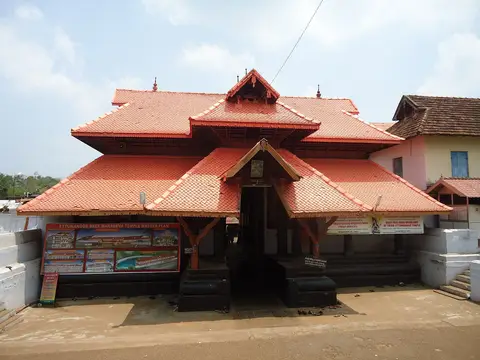 In the appEttumanoor Mahadeva Temple, EttumanoorEttumanoor, Kottayam district, Kerala
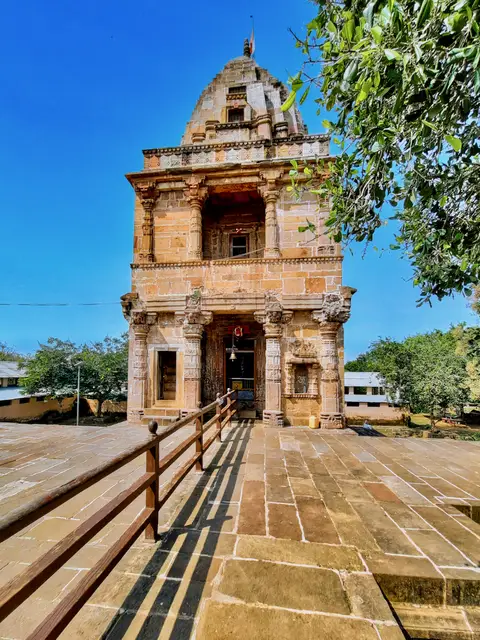 In the appGauri Somnath Temple, OmkareshwarOmkareshwar, Khandwa district, Madhya Pradesh