
Why devotees come here
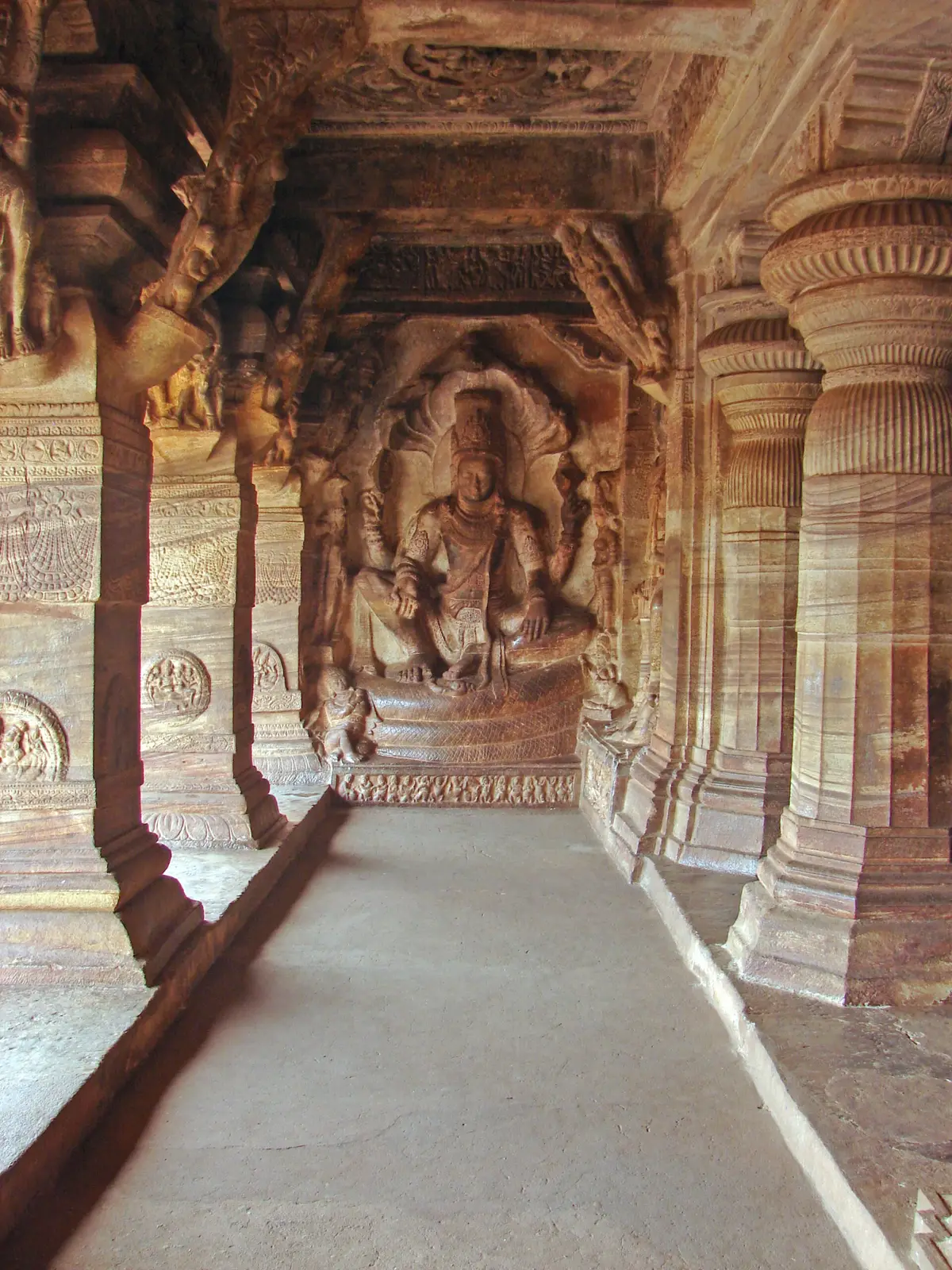
Four cave temples are carved into a cliff south-east of Badami town, in northern Karnataka. They are among the earliest known Hindu temples in the Deccan, and the complex also includes Buddhist and Jain caves.
Badami was earlier called Vataapi, and it served as the capital of the early Chalukya dynasty. That dynasty ruled much of Karnataka from the 6th to the 8th century. The caves are some of the earliest known Hindu temples in the Deccan, and the earliest of them date from the 6th century.
An inscription found here records that Mangalesha dedicated a shrine in Saka 500, which is about 578 or 579 CE. The caves are important examples of Badami Chalukya rock-cut architecture. Four cave temples are cut straight into the stone face of the hill south-east of town.
Cave 1 has a carving of Shiva dancing as Nataraja, among other scenes of Hindu gods and legends. The first three caves focus on Shiva and Vishnu. The largest relief in Cave 2 shows the legend of Vishnu in his Trivikrama form, taking one of three steps. Cave 4 is the Jain cave, with major carvings of Bahubali, Parshvanatha and Mahavira.
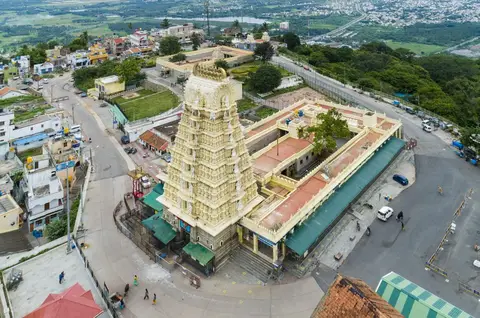 In the appChamundeshwari Temple, MysuruChamundi Hill, Mysuru, Karnataka
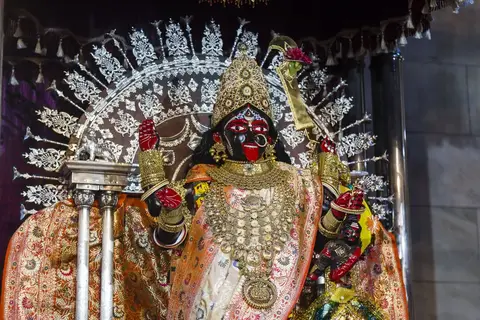 In the appDakshineswar Kali Temple, KolkataDakshineswar, North 24 Parganas, near Kolkata, West Bengal
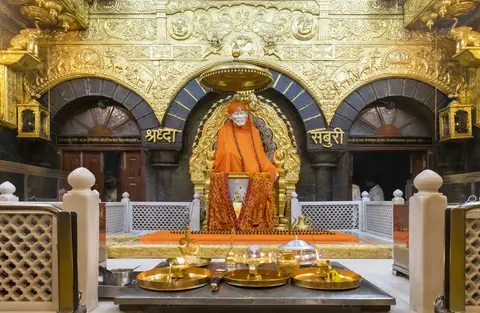 In the appShirdi Sai Baba Temple, MaharashtraShirdi, Rahata taluka, Ahilyanagar district, Maharashtra
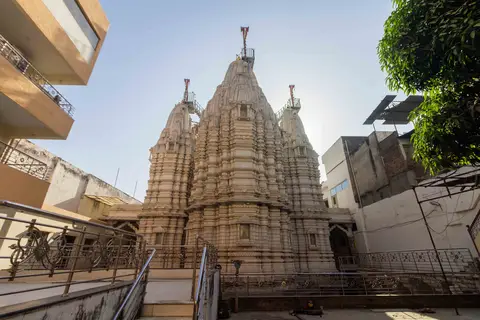 In the appAvanti Parshwanath Jain Tirth, UjjainDani Gate, Ujjain, Madhya Pradesh
 In the appBelur Math, West BengalBelur, Howrah district, West Bengal
 In the appBrihadeeswara Temple, ThanjavurThanjavur, Thanjavur district, Tamil Nadu
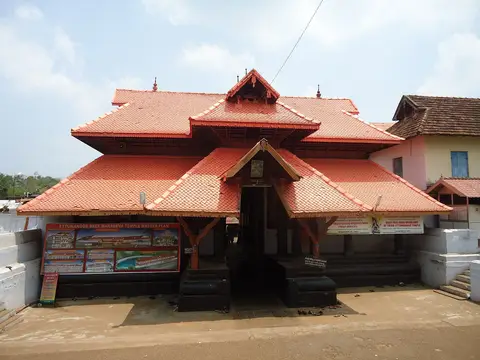 In the appEttumanoor Mahadeva Temple, EttumanoorEttumanoor, Kottayam district, Kerala