

Why devotees come here
Gunja Narasimha Temple stands on the right bank of the Kaveri river in Tirumakudalu Narasipura, a town 32 km south-east of the Mysore district headquarters. It is a large complex of the Vijayanagara period, dedicated to Narasimha, and the town is known as Dakshina Kashi.
The Skanda Purana names Tirumakudalu Narasipura as one of the Trimakuta Kshetras, holy places at the confluence of three rivers. The town sits where the Cauvery, the Kapila and the mythical Spatika Sarovar meet, and it is known as Dakshina Kashi. The town lies in Mysore district in the Indian state of Karnataka.
The Gunja Narasimha Swamy temple stands on the right bank of the Kaveri. It is a massive complex from the Vijayanagara period. Its inscriptions date from the time of Krishnadevaraya, and the architecture mixes Dravidian and Hoysala styles. The temple is known for its voluminous records in Nagari script.
Agasthyeshwara temple in the same town is older than the Gunja Narasimha temple. The Panchalinga Darshana draws large crowds to the town. A Kumbh Mela has been held here once every three years since 1989.
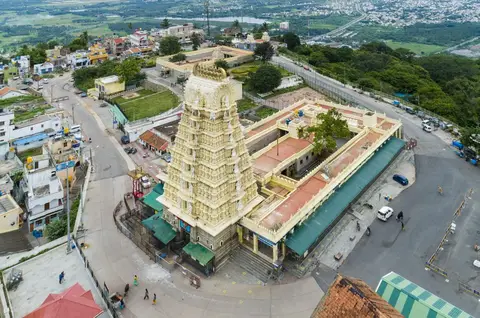 In the appChamundeshwari Temple, MysuruChamundi Hill, Mysuru, Karnataka
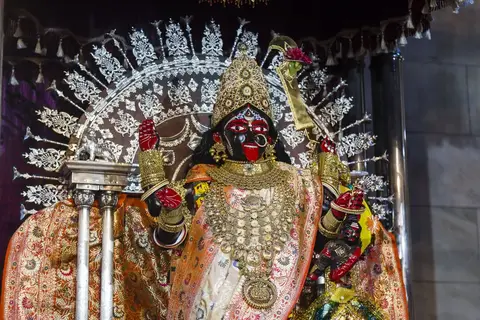 In the appDakshineswar Kali Temple, KolkataDakshineswar, North 24 Parganas, near Kolkata, West Bengal
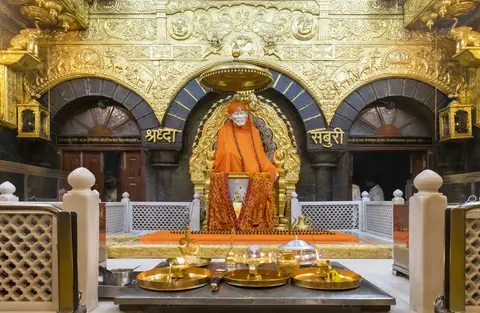 In the appShirdi Sai Baba Temple, MaharashtraShirdi, Rahata taluka, Ahilyanagar district, Maharashtra
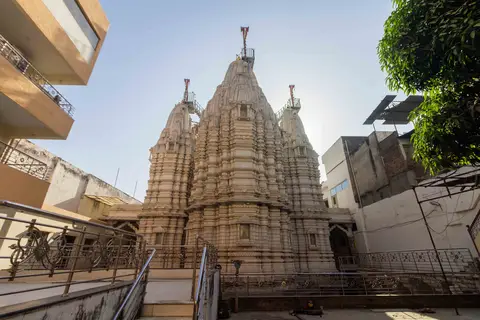 In the appAvanti Parshwanath Jain Tirth, UjjainDani Gate, Ujjain, Madhya Pradesh
 In the appBelur Math, West BengalBelur, Howrah district, West Bengal
 In the appBrihadeeswara Temple, ThanjavurThanjavur, Thanjavur district, Tamil Nadu
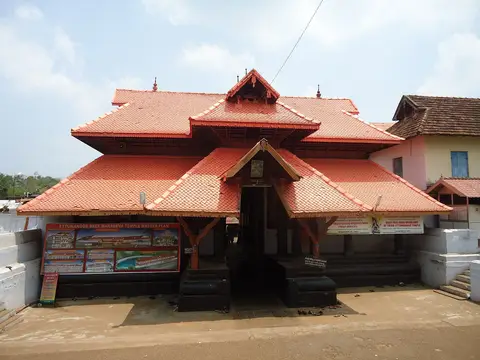 In the appEttumanoor Mahadeva Temple, EttumanoorEttumanoor, Kottayam district, Kerala