
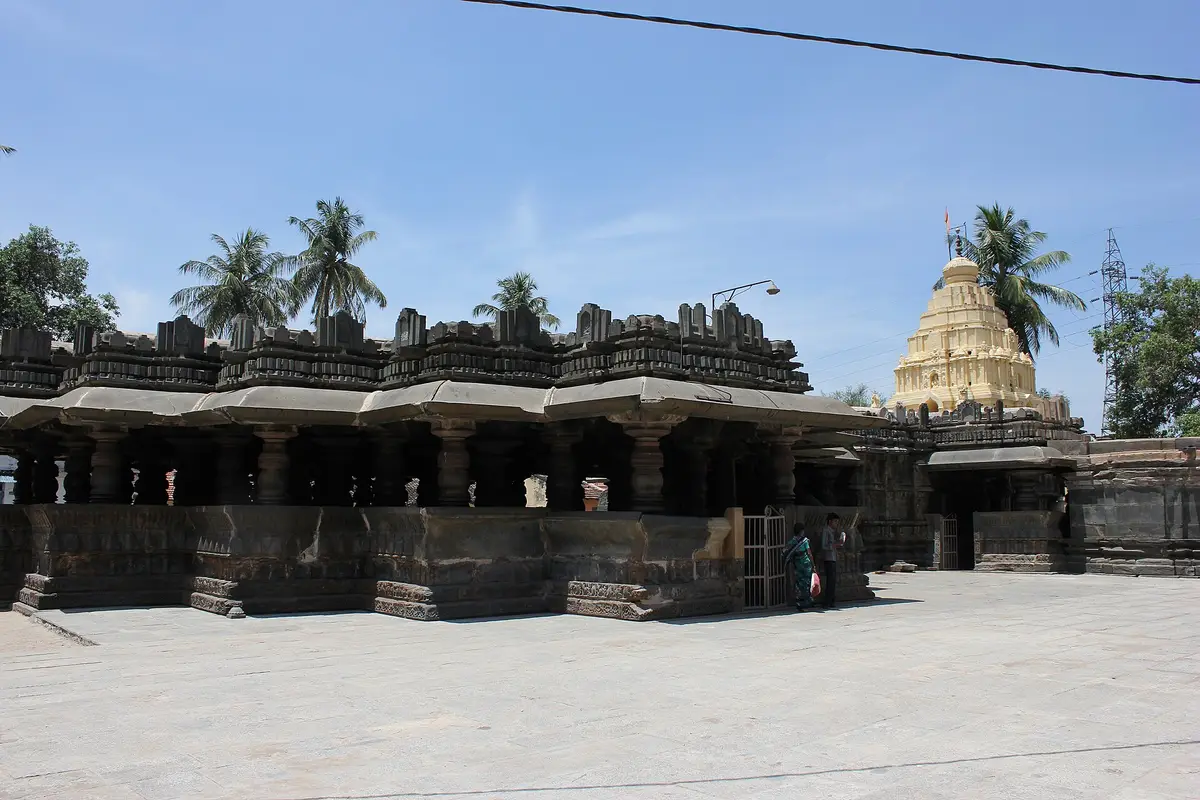
Why devotees come here
Harihareshwara Temple stands in Harihar, a city on the Tungabhadra River in Davanagere district, Karnataka. It is dedicated to Shri Harihara, a form that joins Vishnu and Shiva in one deity. The temple was built around 1223 to 1224 CE, in the Hoysala period.
Legend says that Brahma had granted the demon Guha a boon, so neither Vishnu nor Shiva could kill him alone. The two gods took the form of Harihara, a fusion of both, came down to earth and destroyed him. The legend places the descent of this form at nearby Kudalur, where the Tungabhadra and Haridra rivers meet.
The temple was built around 1223 to 1224 CE by Polalva, a commander and minister of the Hoysala king Vira Narasimha II. In 1268 CE, Soma, a commander of King Narasimha III, made some additions. It follows a staggered square hall plan typical of Hoysala temples and is built of soapstone, also called potstone. The original tower over the shrine is missing; a tower of brick and mortar replaces it. The ceiling of the open hall carries lotus carvings, and several old Kannada inscriptions and hero stones are kept within the temple premises.
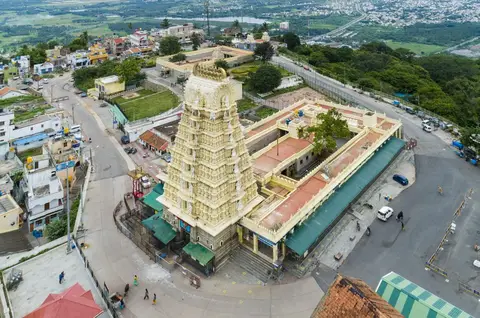 In the appChamundeshwari Temple, MysuruChamundi Hill, Mysuru, Karnataka
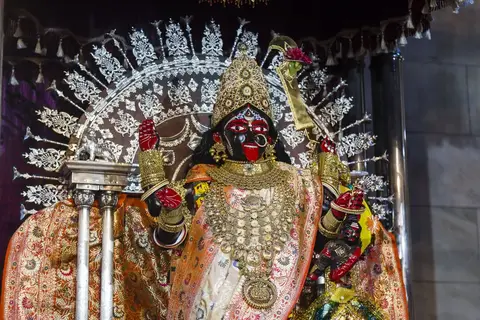 In the appDakshineswar Kali Temple, KolkataDakshineswar, North 24 Parganas, near Kolkata, West Bengal
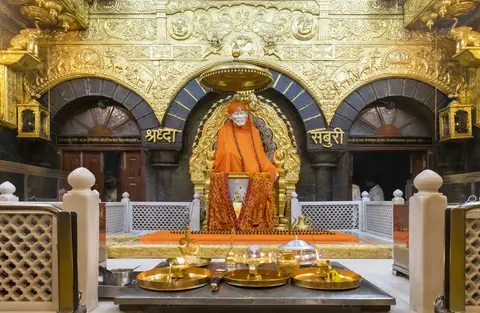 In the appShirdi Sai Baba Temple, MaharashtraShirdi, Rahata taluka, Ahilyanagar district, Maharashtra
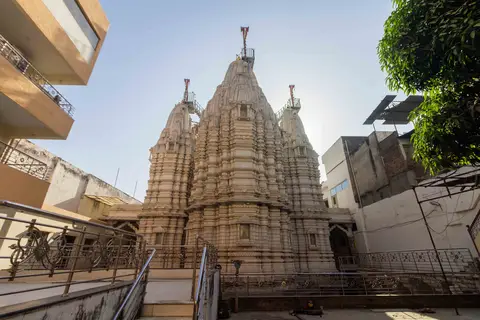 In the appAvanti Parshwanath Jain Tirth, UjjainDani Gate, Ujjain, Madhya Pradesh
 In the appBelur Math, West BengalBelur, Howrah district, West Bengal
 In the appBrihadeeswara Temple, ThanjavurThanjavur, Thanjavur district, Tamil Nadu
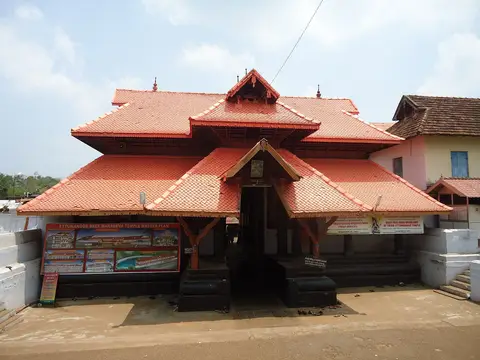 In the appEttumanoor Mahadeva Temple, EttumanoorEttumanoor, Kottayam district, Kerala