
Why devotees come here
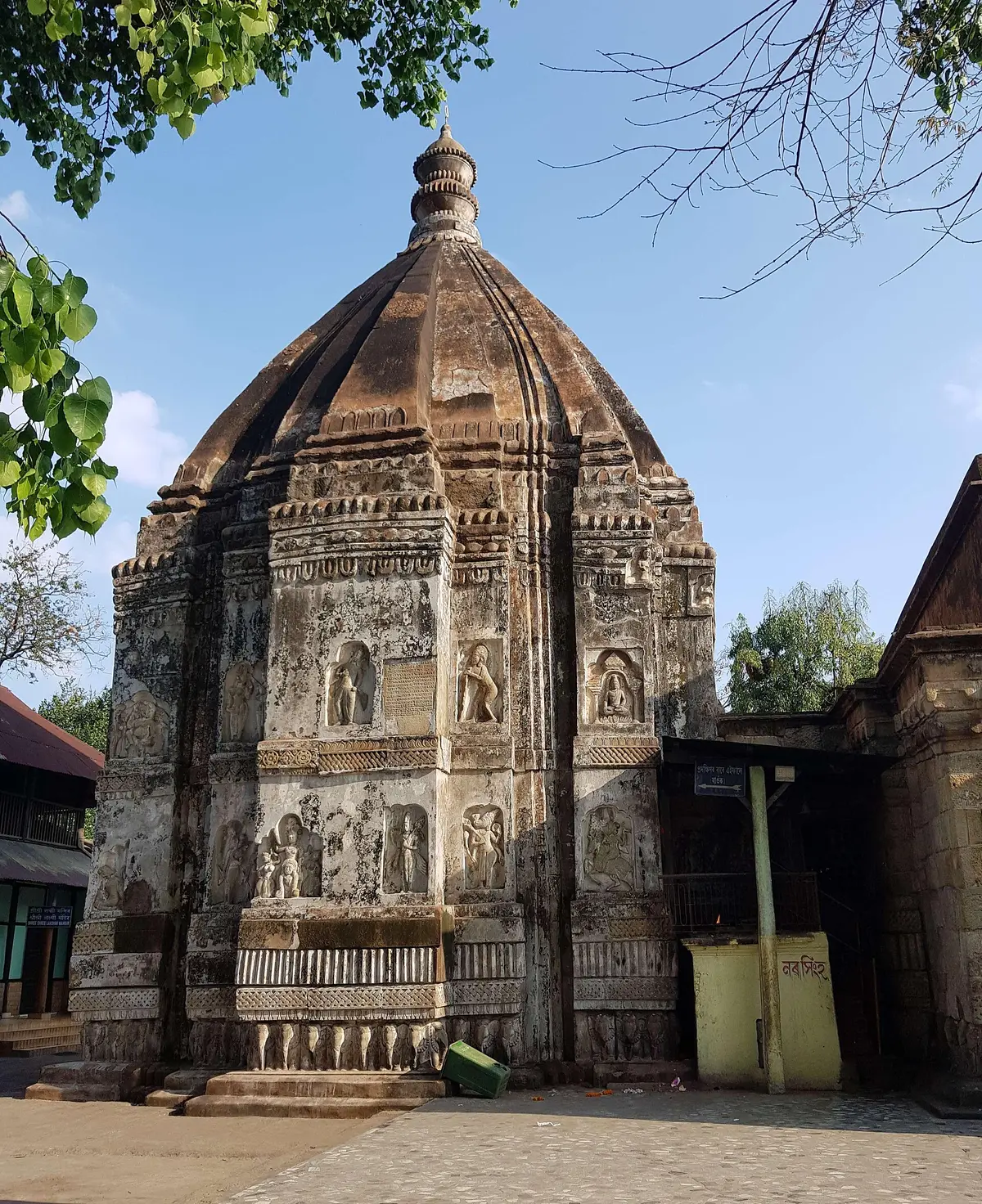
Hayagriva Madhava Temple stands on Monikut hill near Hajo in Kamrup district, Assam, about 30 km west of Guwahati. It is a Vishnu shrine, and the lamps in its sanctum are kept lit without a break.
The temple is popularly known as Hayagriva Madhava, a Vaishnava shrine to Vishnu. The Archaeological Survey of India calls it a famous shrine of Hajo. The Bhutia community believes the image was first kept in a monastery in Lhasa, and that a Brahmin carried it to Hajo. The district government says the temple preaches both Hinduism and Buddhism. This attracts Buddhist monks from far-off places. The lamps in the sanctum are never put off, and this unbroken flame is called the akhanda deep.
The Koch king Raghudeva, who ruled from 1581 to 1603, rebuilt the temple in 1583 over the foundations of older ruins from the 10th and 11th centuries. Local tradition holds that the first temple was built under the Pala dynasty in the 10th century. It is a Nagara architecture temple, with a mandapa (front hall), antarala (the link to the sanctum) and garbhagriha (inner sanctum). The Nagara sikhara over the sanctum is carved with sculptures of Brahmanical deities. The mandapa has an arched doorway, and its roof rests on four massive corner pillars. A continuous row of carved elephants runs along the lowest level of the walls.
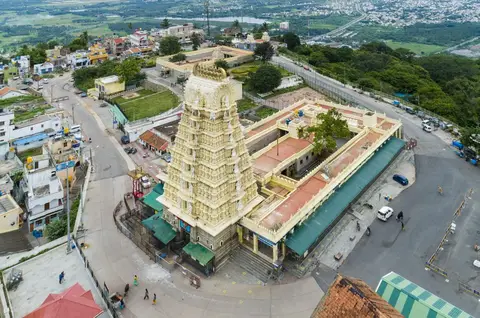 In the appChamundeshwari Temple, MysuruChamundi Hill, Mysuru, Karnataka
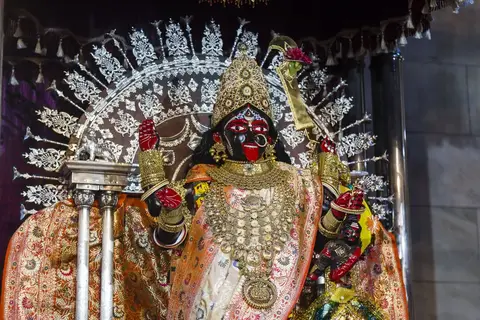 In the appDakshineswar Kali Temple, KolkataDakshineswar, North 24 Parganas, near Kolkata, West Bengal
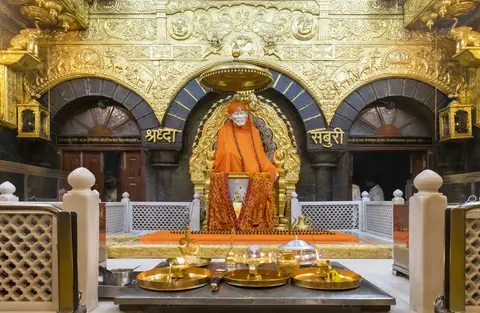 In the appShirdi Sai Baba Temple, MaharashtraShirdi, Rahata taluka, Ahilyanagar district, Maharashtra
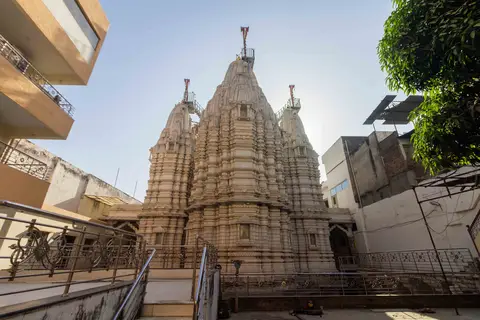 In the appAvanti Parshwanath Jain Tirth, UjjainDani Gate, Ujjain, Madhya Pradesh
 In the appBelur Math, West BengalBelur, Howrah district, West Bengal
 In the appBrihadeeswara Temple, ThanjavurThanjavur, Thanjavur district, Tamil Nadu
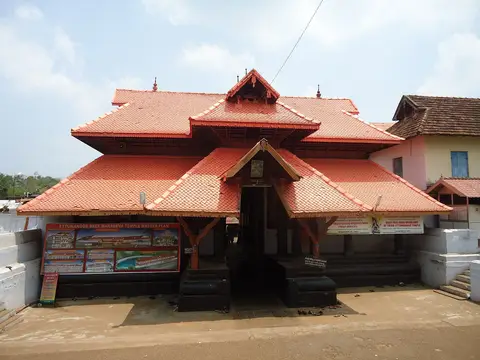 In the appEttumanoor Mahadeva Temple, EttumanoorEttumanoor, Kottayam district, Kerala