
Why devotees come here
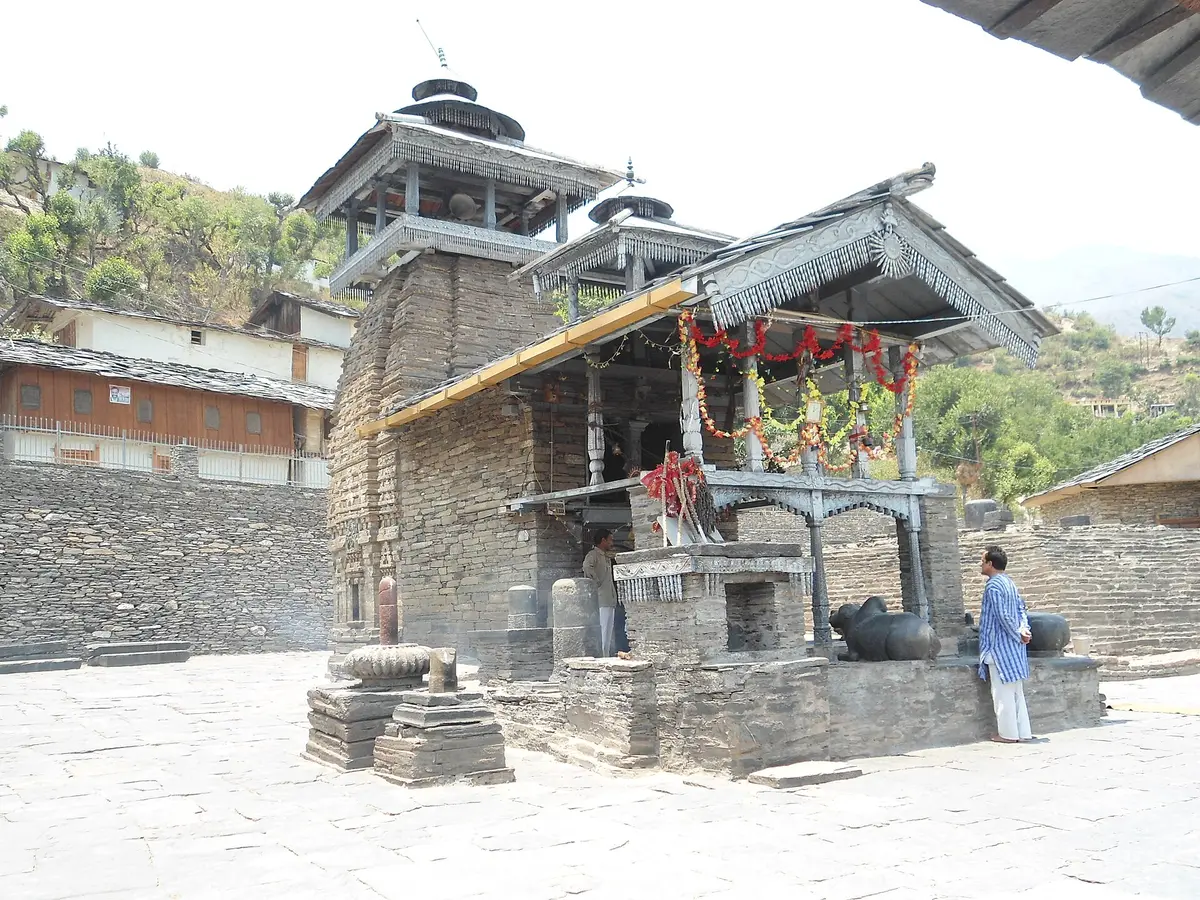
Lakhamandal Shiva Temple is an ancient Hindu temple complex in the Jaunsar-Bawar region of Dehradun district, Uttarakhand. It is dedicated to Shiva and stands beside the Yamuna River in Lakhamandal village.
Devotees believe a visit to this Shiva shrine ends their misfortunes, and the temple is popular among Shaivites. Local people hold that the temple and the adjoining area are where Duryodhana plotted to burn the Pandavas alive in a house of shellac, the Lakshyagriha of the Mahabharata. This is a local belief, not settled history.
The Nagara-style temple was built around the 12th to 13th century CE. Evidence of building on the site goes back to about the 5th to 8th century CE, and a 6th-century stone inscription records a Shiva temple here built by a princess named Ishwara. The architecture is North Indian, the style common in the hills of Garhwal and Himachal Pradesh.
The main attraction is a graphite lingam that shines when wet and reflects its surroundings. Twin statues of Danav and Manav stand beside the main shrine as its dwarpals, or doormen. The Yamuna River flows alongside Lakhamandal village, where the temple is situated.
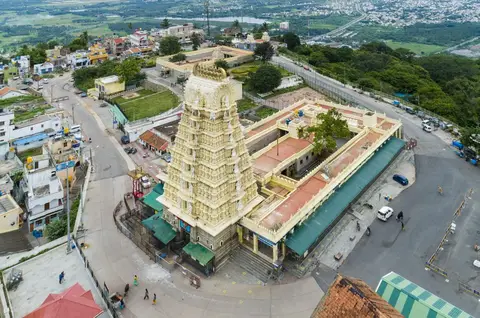 In the appChamundeshwari Temple, MysuruChamundi Hill, Mysuru, Karnataka
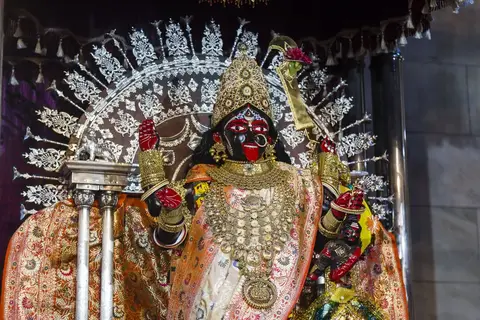 In the appDakshineswar Kali Temple, KolkataDakshineswar, North 24 Parganas, near Kolkata, West Bengal
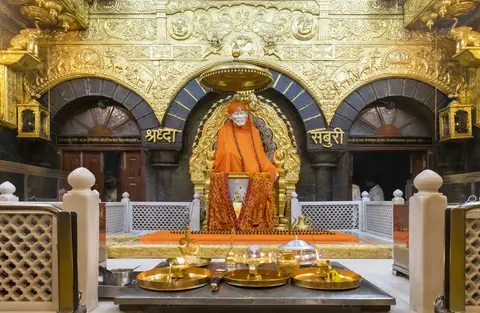 In the appShirdi Sai Baba Temple, MaharashtraShirdi, Rahata taluka, Ahilyanagar district, Maharashtra
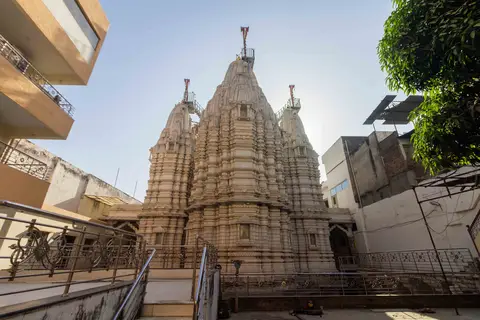 In the appAvanti Parshwanath Jain Tirth, UjjainDani Gate, Ujjain, Madhya Pradesh
 In the appBelur Math, West BengalBelur, Howrah district, West Bengal
 In the appBrihadeeswara Temple, ThanjavurThanjavur, Thanjavur district, Tamil Nadu
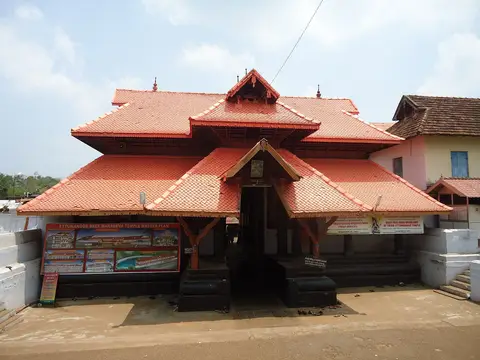 In the appEttumanoor Mahadeva Temple, EttumanoorEttumanoor, Kottayam district, Kerala