
Why devotees come here
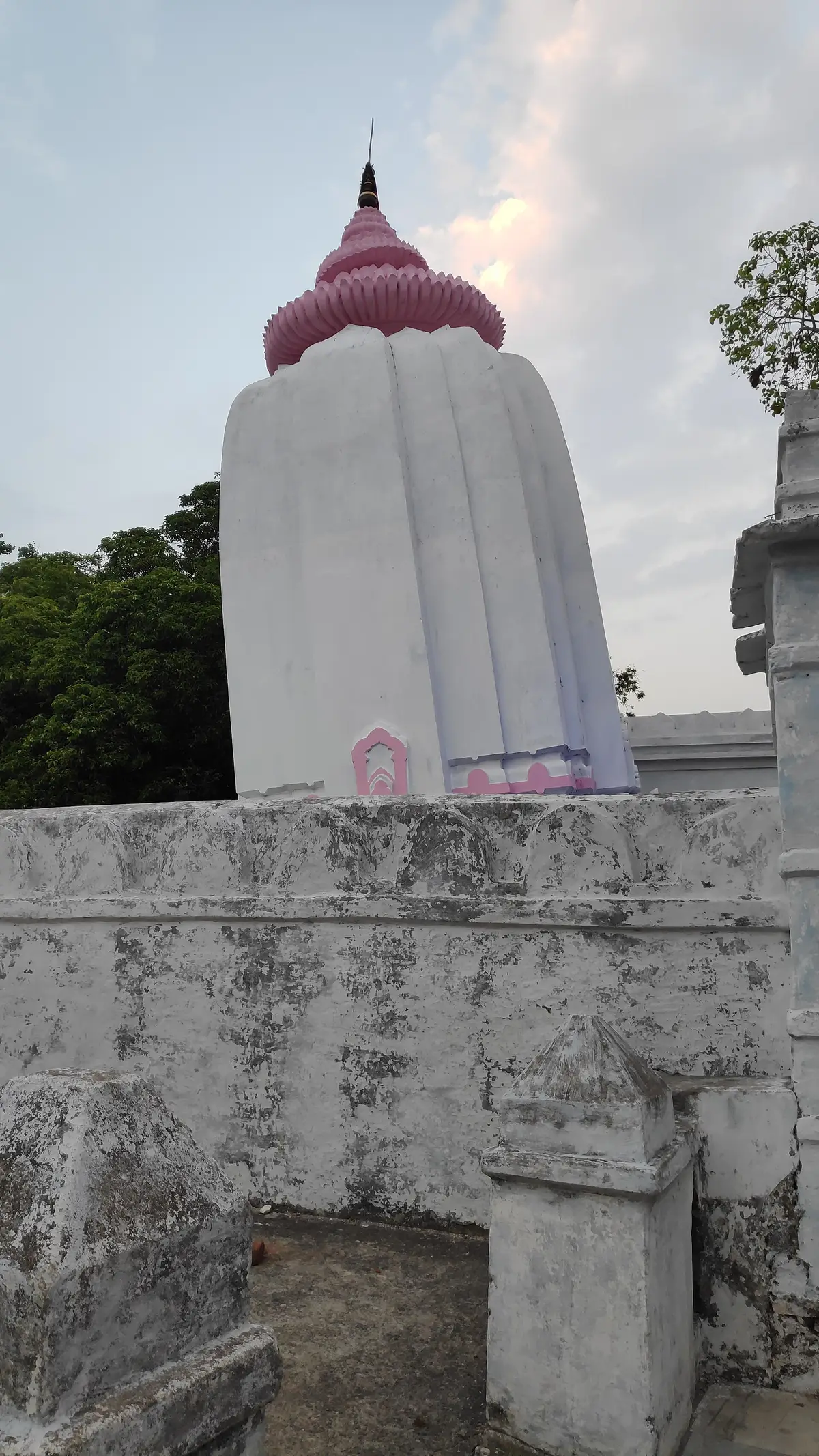
The Leaning Temple of Huma stands on a rocky outcrop on the bank of the Mahanadi, in Huma village, 23 km south of Sambalpur. Its main shrine tilts one way while the smaller shrines around it lean in other directions. It is one of only a very few leaning temples in the world.
Shiva is worshipped here as Bimaleshwar. Legend says a milkman crossed the Mahanadi every day to offer his milk at a rock on the bank. The rock took the milk each time. The wonder led people to make inquiries, and those inquiries ended in the building of the present temple.
Accounts of its founding differ. Historical records credit Ganga Vamsi Emperor Anangabhima Deva-III with building it. The official tourism account says it was believed to have first been built in the 17th century, under the Chauhan rulers of Sambalpur. King Baliar Singh, the fifth Chauhan king of Sambalpur, rebuilt or renovated it between 1660 and 1690.
The temple sits on a rocky outcrop on the bank of the Mahanadi. Its main shrine is tilted in one direction, at an angle of 13.8 degrees, while the smaller shrines around it lean in other directions. The whole complex tilts at noticeable angles, each part leaning in a different direction. It is unknown whether the structure leans by design or for another reason.
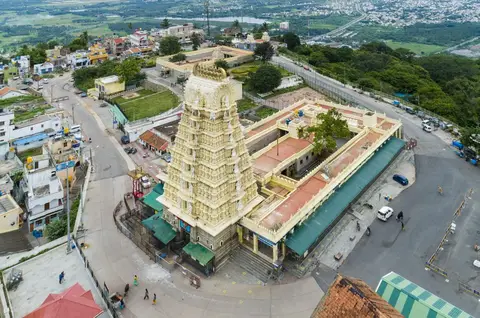 In the appChamundeshwari Temple, MysuruChamundi Hill, Mysuru, Karnataka
 In the appDakshineswar Kali Temple, KolkataDakshineswar, North 24 Parganas, near Kolkata, West Bengal
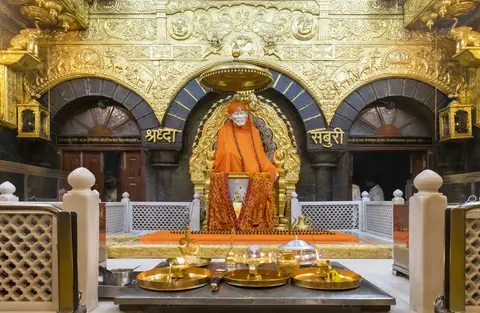 In the appShirdi Sai Baba Temple, MaharashtraShirdi, Rahata taluka, Ahilyanagar district, Maharashtra
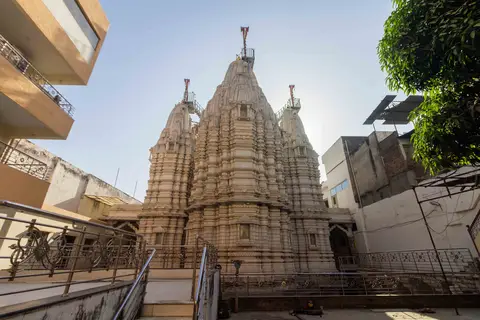 In the appAvanti Parshwanath Jain Tirth, UjjainDani Gate, Ujjain, Madhya Pradesh
 In the appBelur Math, West BengalBelur, Howrah district, West Bengal
 In the appBrihadeeswara Temple, ThanjavurThanjavur, Thanjavur district, Tamil Nadu
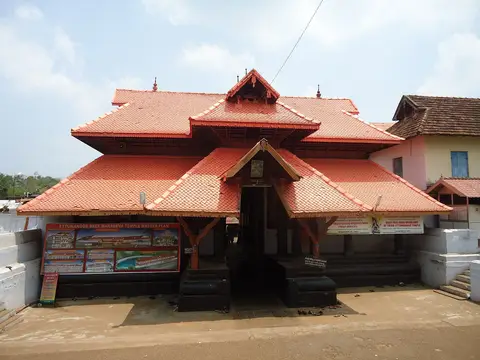 In the appEttumanoor Mahadeva Temple, EttumanoorEttumanoor, Kottayam district, Kerala