

Why devotees come here
Sasivekalu Ganesha Temple stands among the monuments on the Hemakuta hill, in Hampi, Karnataka. Its main image is a Ganesha, about 8 feet tall, carved from a single block of rock. Legend says the temple's name means mustard seed, after the shape of his belly.
Sasivekalu Ganesha is one of two monolithic Ganesha statues on the Hemakuta hill. The other is the Kadalekalu Ganesha, a short walk north. The statue was carved in place, out of the rock that already stood on the site. It has four arms and sits in a half-lotus position. The statue is about 8 feet tall.
Legend says Ganesha once overate, and his stomach swelled dangerously. Another legend says his belly looks like a mustard seed. That is how the temple got its name, since Sasivekalu means mustard seed in Kannada. Both stories are told as legend, not as recorded history.
An inscription on the grounds shows the shrine was built to honour King Narasimha II of the Vijayanagara Empire. Ganesha is shown with his mother Parvati, and he sits in her lap. She can be seen only from the back of the statue. The Ganesha is housed in an open-pillared hall, called a mandapa.
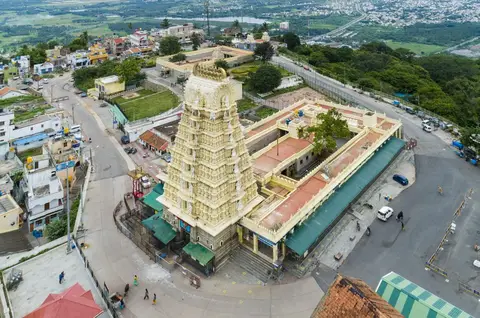 In the appChamundeshwari Temple, MysuruChamundi Hill, Mysuru, Karnataka
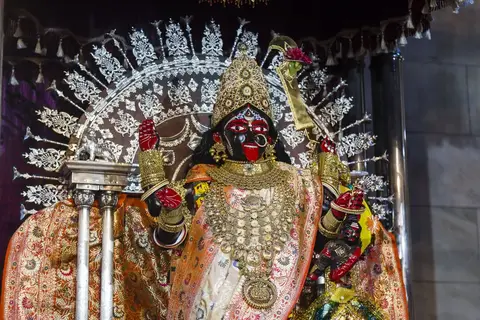 In the appDakshineswar Kali Temple, KolkataDakshineswar, North 24 Parganas, near Kolkata, West Bengal
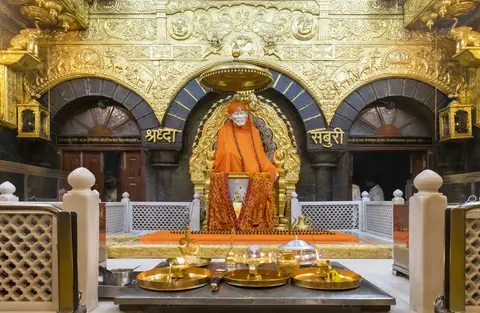 In the appShirdi Sai Baba Temple, MaharashtraShirdi, Rahata taluka, Ahilyanagar district, Maharashtra
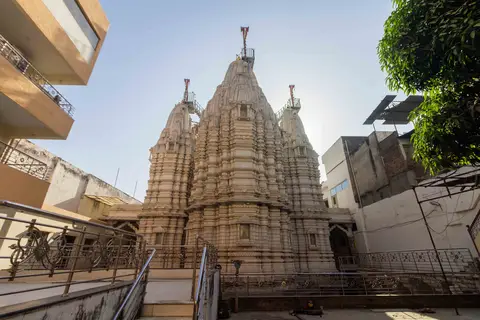 In the appAvanti Parshwanath Jain Tirth, UjjainDani Gate, Ujjain, Madhya Pradesh
 In the appBelur Math, West BengalBelur, Howrah district, West Bengal
 In the appBrihadeeswara Temple, ThanjavurThanjavur, Thanjavur district, Tamil Nadu
 In the appEttumanoor Mahadeva Temple, EttumanoorEttumanoor, Kottayam district, Kerala