
Why devotees come here
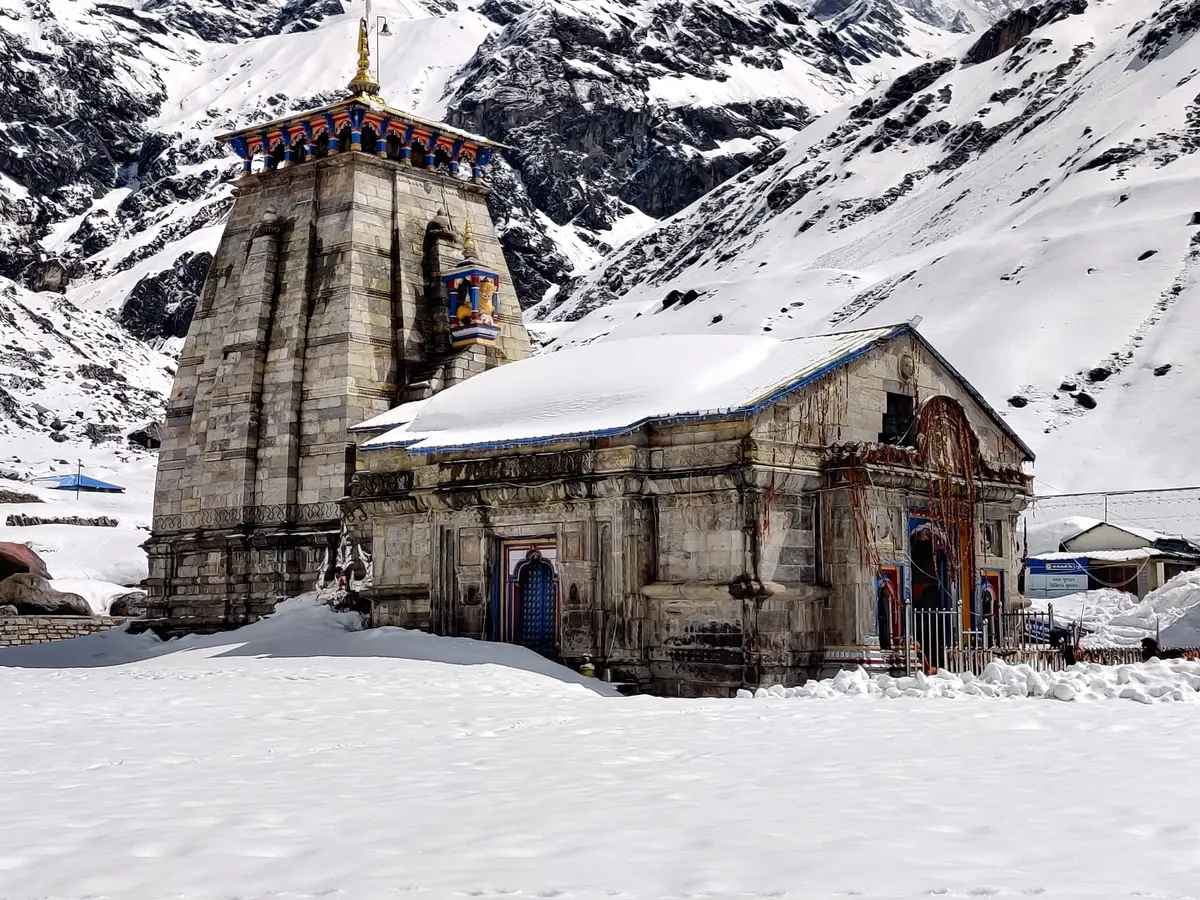
Kedarnath Temple stands at about 3,583 m in the Garhwal Himalayas, beside the Mandakini river. It is the highest of Shiva's twelve Jyotirlingas and one of the Char Dham. It opens only from late April or May until Bhai Dooj, and the last stretch is a 16 to 17 km trek.
After the Kurukshetra war, the Pandavas came looking for Shiva to seek forgiveness. He hid from them in the form of a bull and sank into the ground at Kedarnath. The hump that stayed above the earth is worshipped here as a three-sided, self-formed lingam. Other parts are said to have appeared at Tungnath, Rudranath, Madhyamaheshwar and Kalpeshwar, which together with Kedarnath make the Panch Kedar.
The temple committee says the present stone temple was built by Adi Shankaracharya in the 8th century, on the site of an older one. His samadhi shrine stands behind it. The head priest, the Rawal, comes from the Veerashaiva community of Karnataka.
In the 2013 floods the town was badly damaged, but the temple stood. A huge boulder lodged behind it and turned the debris aside. Pilgrims now worship it as Bhim Shila. Each winter the Panchmukhi image of Kedarnath travels by palanquin to Omkareshwar Temple in Ukhimath, where worship goes on until spring.
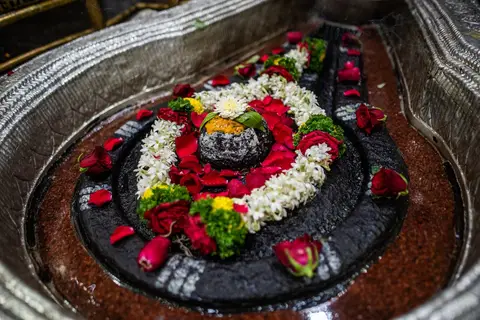 In the appBhimashankar Jyotirlinga, MaharashtraBhimashankar, Khed taluka, Pune district, Maharashtra
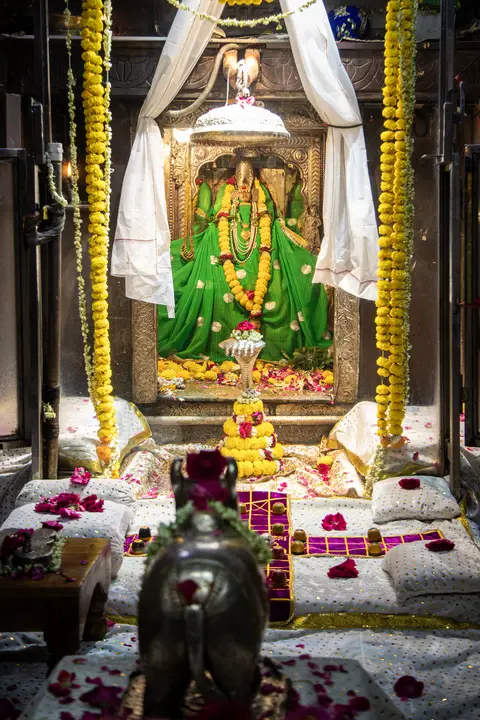 In the appOmkareshwar Jyotirlinga, Madhya PradeshMandhata island, Omkareshwar, Khandwa district, Madhya Pradesh
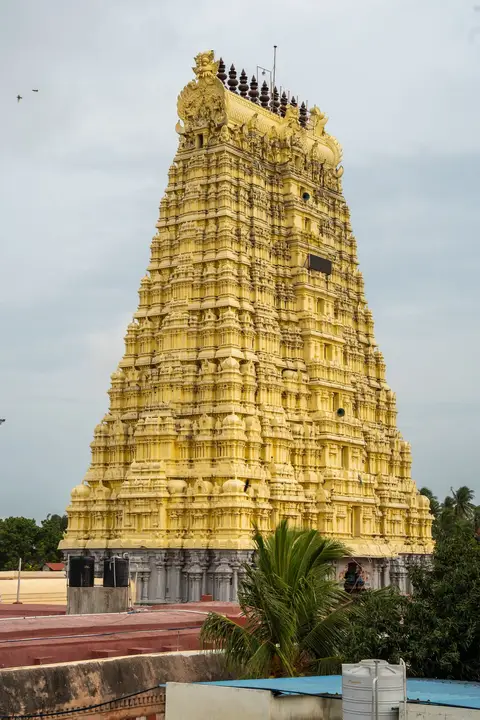 In the appRamanathaswamy Temple, RameswaramRameswaram, Ramanathapuram district, Tamil Nadu
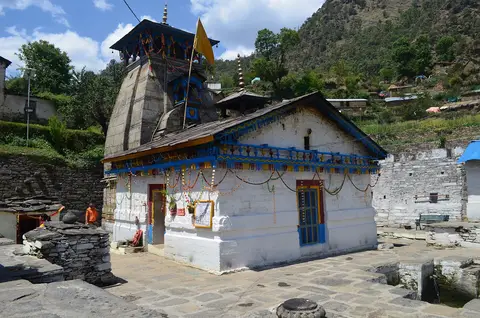 Triyuginarayan Temple, TriyuginarayanTriyuginarayan, Rudraprayag district, Uttarakhand
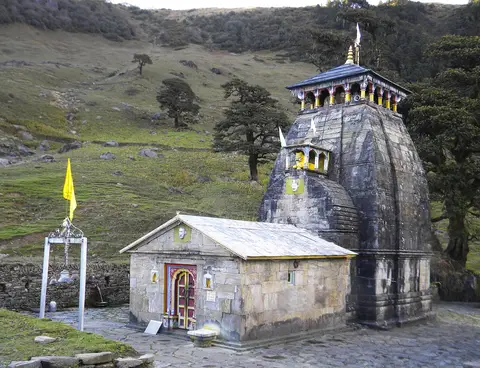 Madhyamaheshwar Temple, GaundarGaundar, Rudraprayag district, Uttarakhand
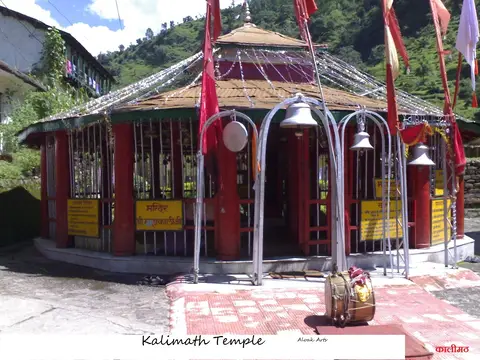 Kalimath Temple, KalimathKalimath, Rudraprayag district, Uttarakhand
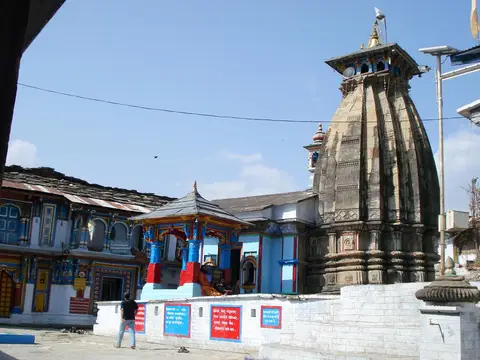 Omkareshwar Temple, UkhimathUkhimath, Rudraprayag district, Uttarakhand
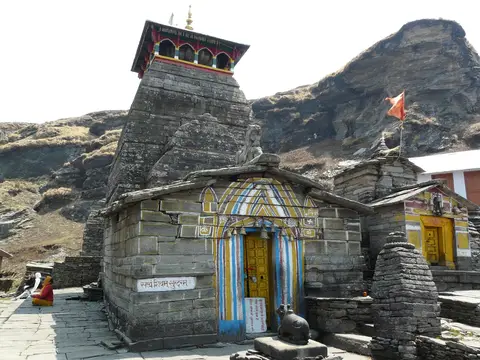 Tungnath Temple, RudraprayagTungnath, Rudraprayag district, Uttarakhand
 Gangotri Temple, GangotriGangotri, Uttarkashi district, Uttarakhand