
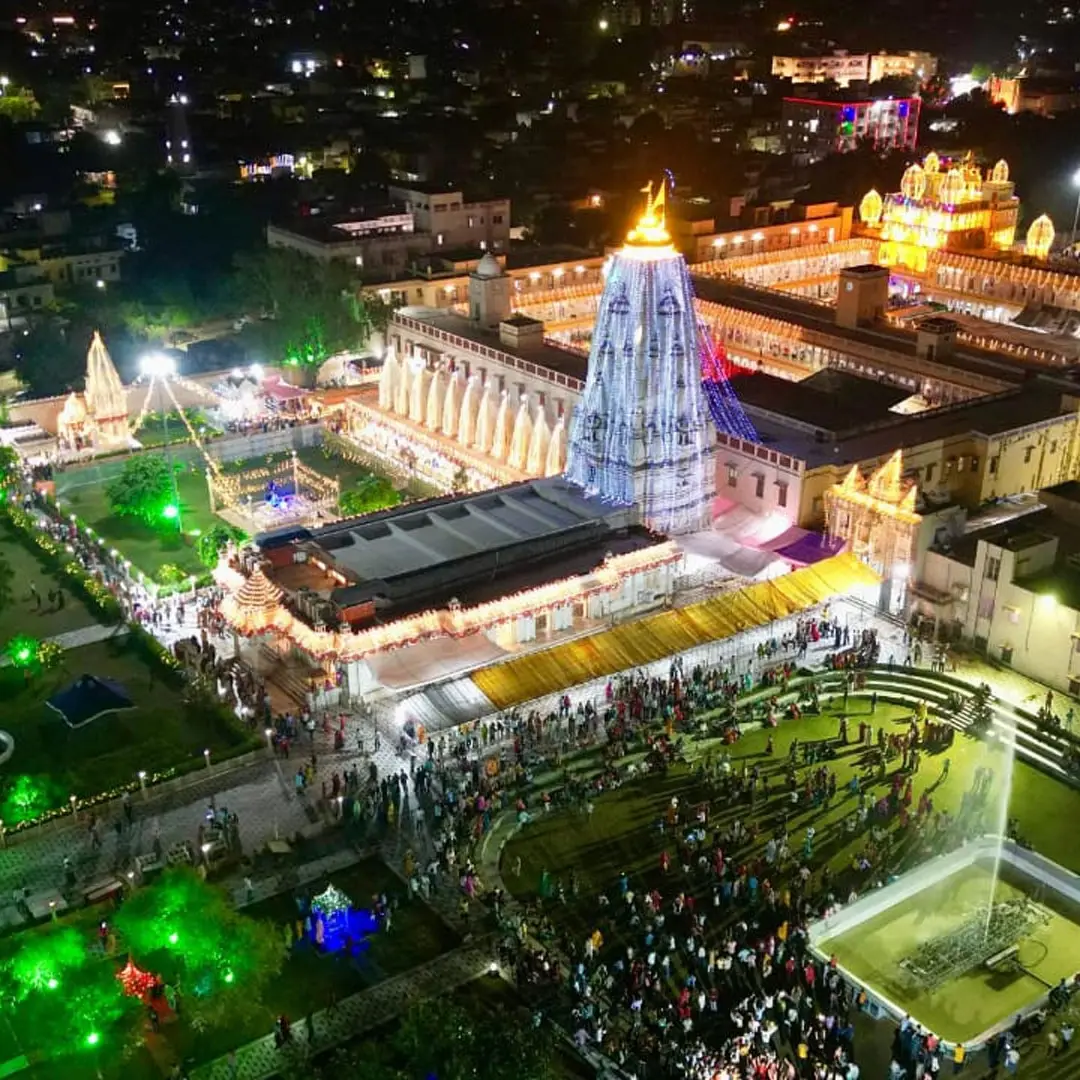
Why devotees come here
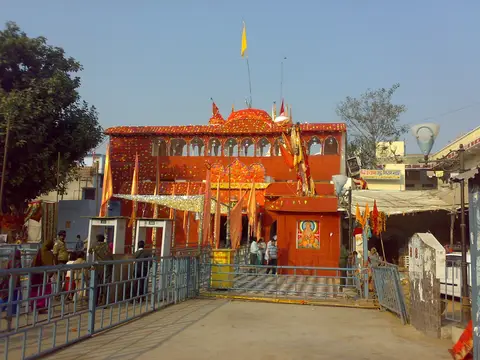
The Rani Sati Dadi temple in Jhunjhunu, Rajasthan, is the main shrine of Narayani Devi, known to devotees as Dadiji. Marwari families, especially Agarwals, come here from across India. There is no idol: a trident is worshipped, in a marble hall full of murals.
Devotees know Narayani Devi as Rani Sati Dadi, the grandmother. Tradition says she was the wife of Tandhan Das of the Jalan family, who was killed in a fight over his horse. The stories of her life differ widely, and are placed anywhere from the 13th to the 17th century. For many Marwari and Agarwal families she is the kuldevi, the family deity.
The temple began as simple memorial mounds and was inaugurated in 1912. The large complex was built between 1917 and 1936 with donations from the Jalan clan. It has a marble main hall, wall paintings and glass mosaics, and smaller shrines to Hanuman, Sita, Thakurji, Ganesha and Shiva.
Sati is a crime in India, and the Commission of Sati (Prevention) Act, 1987 forbids glorifying it. After that law, the Supreme Court allowed worship of Rani Sati inside the temple, but not the annual fair on its grounds.
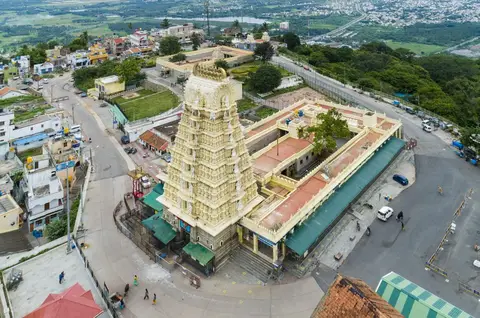 In the appChamundeshwari Temple, MysuruChamundi Hill, Mysuru, Karnataka
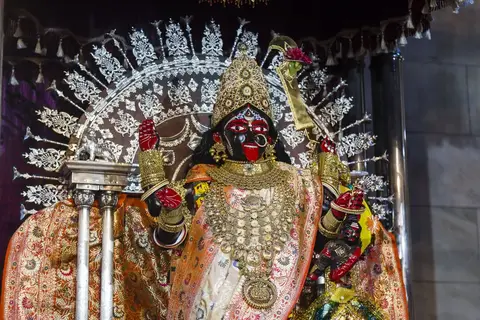 In the appDakshineswar Kali Temple, KolkataDakshineswar, North 24 Parganas, near Kolkata, West Bengal
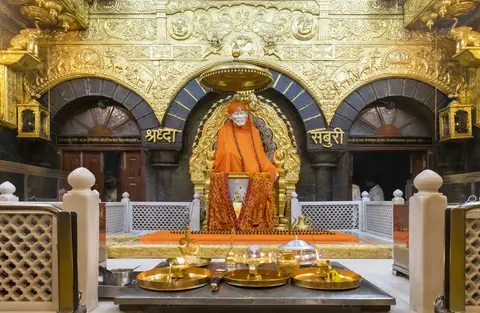 In the appShirdi Sai Baba Temple, MaharashtraShirdi, Rahata taluka, Ahilyanagar district, Maharashtra
 Jeen Mata Temple, SikarJeen Mata, Sikar district, Rajasthan
 Khatu Shyam Temple, KhatuKhatu, Sikar district, Rajasthan