Popular Temples

Shree Shree Govindajee Temple

🕉️
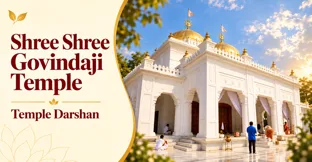
Image of Shree Shree Govindajee Temple
🕉️
Main Deity
The central sanctum sanctorum (Garbhagriha) houses the beautiful, life-sized wooden deities of Lord Govindajee (Lord Krishna) and his divine consort Radha. Historically, these idols were carved out of a single sacred jackfruit tree under the direct instructions of Rajarshi Bhagyachandra.
Contact
Please visit temple website
Full Address
Palace Compound, near the former Royal Palace, Imphal east, Manipur, India.

Condensed Information:

1. Main Deity

The central sanctum sanctorum (Garbhagriha) houses the beautiful, life-sized wooden deities of Lord Govindajee (Lord Krishna) and his divine consort Radha. Historically, these idols were carved out of a single sacred jackfruit tree under the direct instructions of Rajarshi Bhagyachandra.

2. Other Deities (Sub Deities)

Flanking the central shrine are two separate chambers housing other prominent deities:

Northern Chamber: Houses the idols of Lord Jagannath, Subhadra, and Balabhadra.

Southern Chamber: Houses the idols of Lord Krishna and Balarama.

Opening & Closing Timing of the Temple

The temple operates daily in two shifts. It is highly recommended to plan your arrival around the aarti timings to experience the temple at its most vibrant:

  • Morning Shift: 5:30 AM to 1:00 PM
  • Evening Shift: 4:00 PM to 8:30 PM
  • Morning Mangal Aarti: Usually performed between 5:45 AM and 6:00 AM.
  • Evening Sandhya Aarti: Performed at 7:00 PM daily.

The timings may change during festivals and special occasions.

Location- How to Reach/Commuting- Flight/Train/Bus/Taxi Stand/Ferry/Port Air- what ever is available?

The temple is centrally located in the Palace Compound area of Imphal East and is easily accessible through various modes of transport:

  • By Flight (Air): The easiest way to reach Imphal is by air. Bir Tikendrajit International Airport (Imphal Airport) is located just about 8 km away from the temple. Outside the airport, prepaid taxis and direct auto-rickshaws are readily available. The drive to the Palace Compound takes about 20 to 30 minutes.
  • By Train (Rail): Imphal does not have a fully functional major railway station at present. The nearest major railhead is Dimapur Railway Station (Nagaland), which is approximately 200 km away. From Dimapur, you can take daily shared cabs (Tata Sumo/Winger) or state transport buses to reach Imphal (travel time: 6 to 8 hours by road).
  • By Bus / Taxi: Regular private and government luxury buses connect Imphal to major nearby Northeastern cities like Guwahati, Kohima, Jiribam and Silchar. If you are already within Imphal city, local auto-rickshaws and cabs will drop you directly inside the Palace Compound gates.

What Special Poojas or Rituals can I perform, and what are the rates?

Aartis & Sankirtana: Daily Mangal Aarti (6:00 AM) and Sandhya Aarti (7:00 PM) accompanied by live devotional Sankirtana music (drums and cymbals) played by permanent musicians.

Major Festivals
  • Janmashtami (August).
  • Kang (Rathayatra) (June-July).
  • Ras Lila classical dance performed on Yaosong (Holi), Basant Purnima (Feb), and Kartik Purnima (Oct).

Rates & Booking: There is no digital rate chart or online booking. Devotees wanting to organize custom offerings, special floral decorations, or feasts must visit the on-site temple office to pay cash and book in person.

Does any Online Service exist?

No Online Services: Currently, the temple does not offer any online services. There is no official portal for booking online darshan, booking online poojas, or ordering Prasadam home-delivery. All interactions and bookings must be done physically on-site.

What is the Prescribed Dress Code?

The daily worship practice followed in the temple, in the morning and evening hours, is very ritualistic and highly disciplined, with a strict dress code observed by the devotees:

  • For Men: Men who come to offer worship here are to wear only a white shirt or a kurta in a light shade and a dhoti. Avoid wearing shorts, Bermudas, sleeveless shirts, or sports jerseys.
  • For Women: Women must dress in the traditional pink-hued Pungou Phanek and Innafi (traditional Manipuri wrap-around and shawl), or a classic Sari or conservative Salwar-Kameez. Ripped jeans, shorts, and sleeveless tops are strictly prohibited.
  • Footwear: No shoes or leather items are allowed past the main courtyard. You must safely deposit your footwear at the designated counter near the entrance gate before entering.

Are electronic gadgets allowed inside the temple premises? If yes, which ones? If mobile phones or gadgets are restricted, where can they be safely deposited? Additionally, is photography allowed, and is there any fee prescribed for it?

Personal electronic devices such as mobile phones, tablets, and smartwatches are fully permitted within the temple's open outer courtyard, pathways, and gardens. Visitors can freely take photographs and videos of the magnificent twin gold-plated domes and external royal architecture using their personal phones. There is absolutely no photography fee for personal mobile use in these outer areas.

Restricted Zones (No Media Allowed): Active gadget usage and photography are strictly prohibited once you enter the sacred indoor prayer zones, specifically the grand pillared assembly hall (Nat Mandap) and the inner sanctum sanctorum (Garbhagriha). To prevent any disturbance to the live devotional music and ritual aartis, all mobile devices must be switched off or put on silent mode before ascending the main shrine steps.

Banned Equipment: Professional DSLR/video cameras, drones, laptops, and large recording setups are completely barred from the premises unless you have obtained prior written authorization from the temple administration board for media coverage.

Safe Deposit Facilities: If you prefer not to carry your electronic items inside the complex, you can securely store them at the designated footwear and personal belongings counter located right next to the main entrance gate. Alternatively, since the temple features a large, secure parking ground within the gated Palace Compound, you can safely lock your electronics inside your vehicle before entering.

Is there a lift/elevator, wheelchair facility, or any other infrastructure available at the temple to assist elderly and physically challenged devotees?

The Shree Shree Govindajee Temple is a heritage structure, but it provides dedicated arrangements to ensure that elderly, sick, and physically challenged (Divyangjan) devotees can offer prayers comfortably:

  • Elevator / Lift Status: No. Because the temple is a historic, single-level heritage building built on a moderately raised stone plinth, there are no mechanical lifts or elevators installed on the premises.
  • Wheelchair Availability: Yes. The temple administration maintains a limited number of manual wheelchairs for public use. These can be requested free of charge at the main entrance gate or the temple office on a first-come, first-served basis. (Tip: On major festival days like Janmashtami or Rath Yatra, it is highly recommended to bring your own personal folding wheelchair to avoid waiting times).
  • Ramp Access: To bypass the traditional stone stairs, dedicated wheelchair-friendly concrete ramps are built at the main entrance pathways. This allows smooth, barrier-free access directly into the spacious pillared congregation hall (Nat Mandap) and the outer courtyard.
  • Direct Queue-Free Access: While there are no separate paid VIP tickets, the on-duty temple guards, priests, and local volunteers are exceptionally accommodating. If you are traveling with an elderly person or a devotee with physical challenges, simply inform the security staff at the entrance. They will bypass the standard lines and guide you straight to the front of the viewing area for a peaceful darshan.

Special entry/Special Timing of Darshan for Sick/Senior Citizens /Physically Challenged persons?

The temple has no separate gate or special timings for elderly, sick, or disabled visitors. However, security guards provide priority, queue-free access; simply inform the staff at the entrance, and they will escort them straight to the front of the viewing area. For the quietest experience, visit on weekday mornings between 9:30 AM and 11:30 AM.

Accommodation & Lodging Near the Temple

The temple board does not manage or operate any official pilgrim guest houses, dharamshalas, or Yatri Niwas on the premises. Since the temple is located in the upscale and central Palace Compound (Sana Konung) area of Imphal, you will find excellent third-party lodging options within a 500-meter to 2-kilometer radius.

Types & Costs

Budget Stays & Homestays: Standard clean rooms range from ₹1,000 to ₹1,500 per night (ideal for budget travelers).

Premium/Mid-Range Stays: Top-rated local establishments like The Classic Hotel and Hotel Imolesh are minutes away, costing between ₹2,500 and ₹4,500+ per night.

How to Book: There is no centralized temple booking system. You must secure your rooms independently via major online travel aggregators (like MakeMyTrip, Agoda, or Booking.com). Pre-booking is highly recommended during major Manipuri festivals like Yaosang (Holi) or Kang (Rath Yatra) when local hotels sell out instantly.

Is Shree Shree Govindajee Temple administered under the State Government?

Shree Shree Govindajee Temple is administered under the Shri Govindaji Temple Act, 1972. The Act provides for the management and governance of the temple through the Shri Govindaji Temple Board and includes provisions relating to temple property, administration, and the Temple Fund.

The temple is also officially recognised by the Imphal East District Administration and Manipur Tourism as an important religious, historical, and cultural site. Unlike a privately managed family temple, it is governed by a statutory board constituted under state law. This legal framework helps ensure that the temple’s properties, funds, and cultural assets are managed and protected in accordance with the provisions of the Act.

What are the temple’s construction and architectural features?

Shree Shree Govindajee Temple was originally built in 1846 during the reign of Maharaja Nara Singh. The official Imphal East District Administration states that the temple measures approximately 16.95 metres in length and 18.63 metres in breadth and stands on a plinth about 1.34 metres high.

Its notable architectural features include twin gold-covered domes, a paved courtyard and a large raised congregation hall. The side shrines are associated with Krishna and Balaram and with Jagannath.

The temple was damaged by an earthquake in 1868 and was later rebuilt during the reign of Maharaja Chandrakirti. However, no publicly available structural engineering report provides detailed information about its present seismic resistance, foundation design, mortar composition or scientific material analysis.

What is the special significance of Shree Shree Govindajee Temple?

The temple is one of Manipur’s most important centres of Vaishnavite worship and is closely associated with the former royal family of Manipur. The principal shrine is dedicated to Radha and Govindajee, and the temple remains a living centre of prayer, music, ritual and community devotion.

It is particularly significant for its relationship with Manipuri Ras Lila. Manipur Tourism describes Ras Lila as an expression of the divine love of Radha and Krishna and the devotion of the gopis. Seasonal Ras performances are held at Shree Shree Govindajee Temple on occasions such as Basanta Purnima, Sarada Purnima and Kartik Purnima.

Unlike claims made about certain other sacred sites, no reliable scientific evidence has been published suggesting that the temple possesses a special magnetic field, energy zone or unusual geological phenomenon. Its significance is historical, cultural, devotional and artistic.

Why is the temple connected with Manipur’s royal history?

Shree Shree Govindajee served as an important royal deity of the former rulers of Manipur. Its location beside the former royal palace reflects the close relationship between kingship, religious worship and cultural patronage in the kingdom.

Different rulers contributed to the history of Govindajee worship, the installation of sacred images, construction of the temple and development of Krishna-centred traditions. This royal association distinguishes the temple from an independently founded neighbourhood shrine.

What should a foreign visitor know about the temple’s spiritual character?

A foreign visitor can experience Shree Shree Govindajee Temple as a living place of devotion rather than only as a monument. The temple’s spiritual atmosphere is expressed through prayer, chanting, music, offerings, congregational worship and Ras Lila.

The central spiritual theme is devotion to Radha and Krishna. Ras Lila represents divine love, surrender and the relationship between the individual soul and the divine. Visitors do not need to follow Hinduism to appreciate the calm, discipline, music, architecture and collective devotion found within the temple.

Foreign visitors should
  • wear modest clothing;
  • remove footwear where instructed;
  • maintain silence during worship;
  • avoid standing between devotees and the sanctum;
  • seek permission before taking photographs;
  • avoid photographing rituals from very close range;
  • follow the directions of priests and temple staff; and
  • avoid touching sacred objects or entering restricted sections.

What are the major annual events celebrated at the temple?

The major annual events celebrated at the temple are

Kang Chingba (Rath Yatra): Held in June or July, this massive 10-day festival involves thousands of devotees pulling the giant wooden chariot of Lord Jagannath around the Palace Compound.

Krishna Janmashtami: Observed in August, this is the largest single-day event, drawing massive crowds for midnight ritual baths and night-long prayers.

The Sacred Ras Lila Festivals: The temple hosts world-famous, all-night classical Manipuri dance-dramas during Maha Ras (October/November), Basanta Ras (February/March), and Yaosang/Holi (March).

Experience Divine Darshan

Immerse yourself in the spiritual essence of this sacred temple through our 360° VR experience.

Download Divya Darshan 360 App