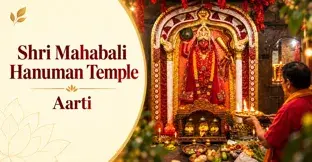
Opening & Closing Timing of the Temple
Morning: 5:00 AM - 12:00 PM
Evening: 4:00 PM - 9:00 PM
Note: The temple sees its highest footfall on Tuesdays and Saturdays.
Location- How to Reach/Commuting- Flight/Train/Bus/Taxi Stand/Ferry/Port Air- what ever is available?
- Flight: Bir Tikendrajit International Airport (Imphal Airport) is the closest, located roughly 7.1 km away.
- Train: Imphal Railway Station is about 11 km away (though standard connectivity is heavily supplemented by Dimapur/Guwahati railheads for interstate travelers).
- Bus/Taxi: Local auto-rickshaws, wingers, and private taxis drop visitors straight to the Wangkhei/Mahabali area. Thiyambung Bus Stop is around 1.7 km away.
Special Poojas/ rituals being performed: provide the Days & Timing of these Poojas. What are the rates associated with it? What is the advance booking procedure?
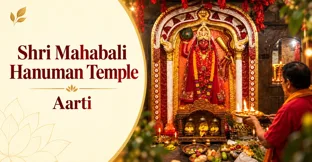
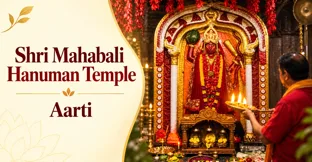
- Daily & Festival Services: Nitya Aarti (daily morning and evening prayers) and Bhajan-Kirtan are performed regularly. Special mass offerings take place on Hanuman Jayanti.
- Rates & Advance Booking: There is no digital booking or fixed commercial tariff menu.
- How to Arrange Offerings: There are no official, commercialized Pooja counters run by the trust. Instead, you can buy simple, traditional offering plates (consisting of fresh flowers, incense, tulsi leaves, fruits, and sweet boondi or laddus) from local vendors set up just outside the forest gate. You can hand these to the priest inside the sanctum, and a voluntary dakshina (cash offering) to the priest is customary.
Any online service exists for serving the customers? If yes by whom?
There is no official online service or booking system. Beware of third-party apps claiming to offer online archanas or virtual tours; none are verified by the local caretakers.
Any specific Dress Code prescribed for entry to the place - men /women/for spl puja and festival days?
There is no officially mandated dress code for visiting Shri Mahabali Hanuman Temple. However, devotees are encouraged to wear clean, modest, and culturally appropriate attire as a mark of respect while entering the temple premises.
For Men: Traditional attire such as dhoti-kurta, kurta-pajama, or a shirt with full-length trousers is considered.
For Women: Sarees, salwar-kameez, Mekhela-style traditional Manipuri attire (Phanek and Innaphi), or other modest Indian clothing are preferred.
During Special Pujas and Festivals: Many devotees choose to wear traditional white or saffron-coloured clothing, though this is based on custom rather than any mandatory requirement.
Visitors are advised to avoid shorts, sleeveless tops, and revealing clothing. Footwear must be removed before entering the temple, and head coverings may be worn as a matter of personal devotion but are not compulsory.
Are Electronic Gadgets allowed? Which all? If mobile/ gadgets are not allowed where it can be deposited in or near the temple premises?
There is no restriction on carrying mobile phones or other electronic gadgets into Shri Mahabali Hanuman Temple. Visitors are advised to keep their devices on silent mode and follow the instructions of the temple authorities. There are no cloakrooms, digital lockers, or secure deposit counters on the premises.
Is Photography allowed? If yes, any fee prescribed?
Photography is generally permitted in the outer areas of Shri Mahabali Hanuman Temple, allowing visitors to capture the temple's architecture and surroundings. However, photography inside the sanctum sanctorum should only be undertaken with the permission of the temple authorities or priests to maintain the sanctity of the shrine. At present, no official photography fee has been prescribed.
Is the Temple Accessible for Elderly and Physically Challenged Visitors? Are Wheelchair and Lift/Elevator Facilities Available?
Shri Mahabali Hanuman Temple does not have accessibility facilities such as lifts, elevators, ramps, or wheelchairs. Visitors requiring mobility assistance are advised to contact the temple authorities before their visit or travel with a companion for a more comfortable darshan experience.
Special entry/Special Timing of Darshan for Sick/Senior Citizens /Physically Challenged persons?
Shri Mahabali Hanuman Temple does not have any officially designated special entry or separate darshan timings for senior citizens, sick devotees, or physically challenged visitors. Those requiring assistance are advised to contact the temple authorities or priests upon arrival for guidance during their visit.
How to arrange offerings and Poojas at the temple?
There are no official, commercialized "Pooja counters" run by the trust. Instead, you can buy simple, traditional offering plates (consisting of fresh flowers, incense, tulsi leaves, fruits, and sweet boondi or laddus) from local vendors set up just outside the forest gate. You can hand these to the priest inside the sanctum, and a voluntary dakshina (cash offering) to the priest is customary.
Safety and Etiquette when dealing with the resident Forest Monkeys
The surrounding Mahabali Forest is home to a large population of wild, free-roaming monkeys. While they are generally accustomed to humans, travelers must follow these safety rules:
- Keep all food items, sweet prasad, and plastic bags securely packed inside your bag until you are inside the protected, netted Mandapam area.
- Do not make direct eye contact, tease, or try to pet the monkeys.
- If you wish to feed them, buy grams or bananas from the local shops and place them on the designated feeding platforms rather than offering them directly from your hand.
What are the parking arrangements for private vehicles?
An open, unpaved parking area is available near the entrance of the Mahabali forest clearing. Two-wheelers and private cars can park here for free. Large traveler buses or mini-buses should drop passengers at the main approach road and park in the wider public parking lots near the Palace Compound (approx. 1 km away) to avoid jamming the narrow forest lane.
Where should pilgrims stay when visiting this temple?
The temple does not provide a guest house or dharamshala facilities. Since the temple is located right inside Imphal city, visitors have easy access to a variety of accommodations in the central town area (near Kangla Fort and Palace Compound), ranging from budget homestays to premium hotels.
Provide construction/ scientific information about the temple
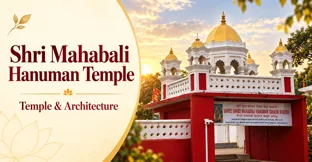
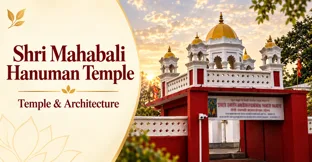
Shri Mahabali Hanuman Temple was built in 1725 CE during the reign of King Garib Niwaj. The original shrine was constructed of brick and follows a hut-type form influenced by Bengal architecture. Its compact sanctum and curved roof distinguish it from temples constructed with a tall northern-style shikhara. A large mandapa was later built in front of the shrine, partly concealing the original structure and pedestal. The brick surfaces were also covered with cement during a later intervention. The complex visible today therefore represents a combination of the historic eighteenth-century shrine and subsequent additions. No publicly available scientific survey identifies the exact mortar composition, foundation system or earthquake resistance of the structure.
How is the temple administration managed, and how can one make donations?
The temple is a state-protected monument under the State Archaeology Department of Manipur and is managed day-to-day by local traditional community trusts. Since there are no online banking facilities or tax-exempt (80G) digital portals, donations can only be made physically via cash into the Hundi (donation boxes) inside the temple or at the small administrative desk for temple upkeep.
What kind of Prasad is available, and can you take it home?
The primary prasad distributed at the temple consists of standard sweets like laddus or roasted gram (chana). On major festival days, a community meal (Bhandara) is served to all. For carrying home, you can purchase packaged dry sweets and dry fruits from the vendors operating right outside the main gate.
Best Time to Visit & Seasonal Planning
The ideal time to visit is from October to March when the weather in Imphal is pleasant and cool. Planning your trip around Hanuman Jayanti (October–November) allows you to witness the vibrant Manipuri Sankirtana (devotional drumming and dancing).